
Introduction
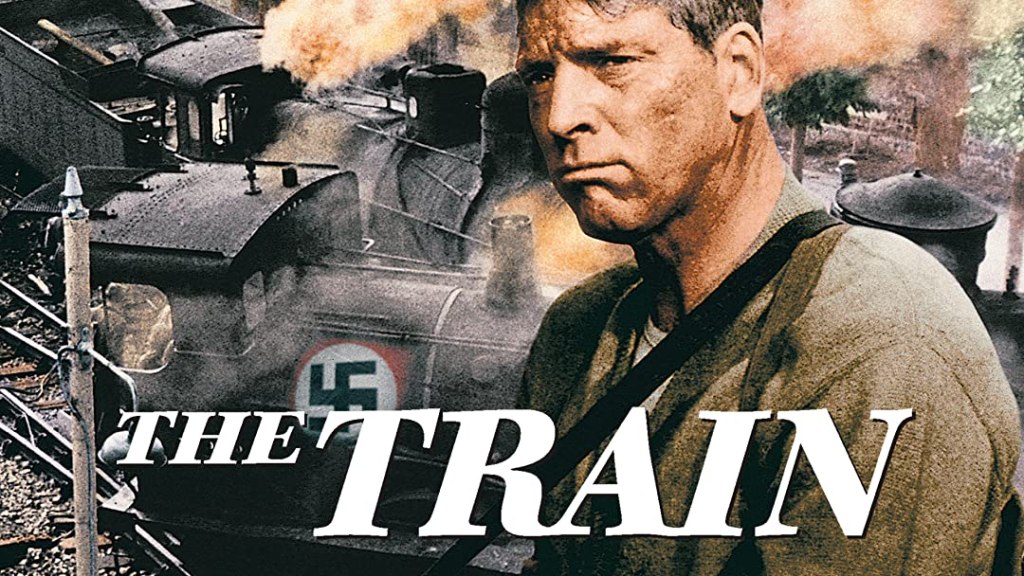
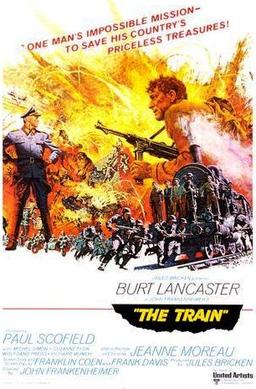
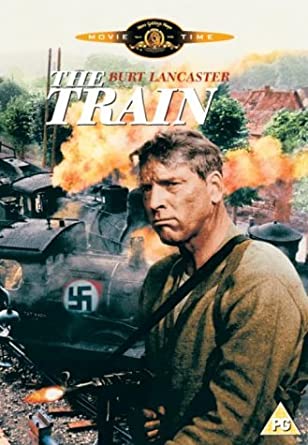
The Train is a 1964 American French war film directed by John Frankenheimer.
Its screenplay – written by Franklin Coen, Frank Davis, and Walter Bernstein – is loosely based on the non-fiction book Le front de l’art by Rose Valland, who documented the works of art placed in storage that had been looted by the Germans from museums and private art collections.
Set in August 1944, it sets French Resistance-member Paul Labiche (Lancaster) against German Colonel Franz von Waldheim (Scofield), who is attempting to move stolen art masterpieces by train to Germany. Inspiration for the scenes of the train’s interception came from the real-life events surrounding train No. 40,044 as it was seized and examined by Lt. Alexandre Rosenberg of the Free French forces outside Paris.
Outline
In August 1944, masterpieces of modern art stolen by the Wehrmacht are being shipped to Germany; the officer in charge of the operation, Colonel Franz von Waldheim, is determined to take the paintings to Germany, no matter the cost. After the works chosen by Waldheim are removed from the Jeu de Paume Museum, curator Mademoiselle Villard seeks help from the French Resistance. Given the imminent liberation of Paris by the Allies, they need only delay the train for a few days, but it is a dangerous operation and must be done in a way that does not risk damaging the priceless cargo.
Resistance cell leader and SNCF area inspector Paul Labiche initially rejects the plan, telling Mlle. Villard and senior Resistance leader Spinet, “I won’t waste lives on paintings”; but he has a change of heart after a cantankerous elderly engineer, Papa Boule, is executed for trying to sabotage the train on his own. After that sacrifice, Labiche joins his Resistance teammates Didont and Pesquet, who have been organising their own plan to stop the train with the help of other SNCF Resistance members. They devise an elaborate ruse to reroute the train, temporarily changing railway station signage to make it appear to the German escort as if they are heading to Germany when they have actually turned back toward Paris. They then arrange a double collision in the small town of Rive-Reine that will block the train without risking the cargo. Labiche, although shot in the leg, escapes on foot with the help of the widowed owner of a Rive-Reine hotel, Christine, while other Resistance members involved in the plot are executed.
The night after the collision, Labiche and Didont meet Spinet again, along with young Robert (the nephew of Jacques, the executed Rive-Reine station master) and plan to paint the tops of three wagons white to warn off Allied aircraft from bombing the art train. Robert recruits railroad workers and friends of his Uncle Jacques from nearby Montmirail, but the marking attempt is discovered, and Robert and Didont are both killed.
Now working alone, Labiche continues to delay the train after the tracks are cleared, to the mounting rage of von Waldheim. Finally, Labiche manages to derail the train without endangering civilian hostages that the colonel has placed on the locomotive to prevent it being blown up. Von Waldheim flags down a retreating army convoy and learns that a French armoured division is not far behind. The colonel orders the train unloaded and attempts to commandeer the trucks, but the officer in charge refuses to obey his orders. The train’s small German contingent kills the hostages and joins the retreating convoy.
Von Waldheim remains behind with the abandoned train. Crates are strewn everywhere between the track and the road, labelled with the names of famous artists. Labiche appears and the colonel castigates him for having no real interest in the art he has saved:
“Does it please you, Labiche? You feel a sense of excitement at just being near them? A painting means as much to you as a string of pearls to an ape. You won by sheer luck. You stopped me without knowing what you were doing or why…. You are nothing Labiche, a lump of flesh. The paintings are mine. They always will be. Beauty belongs to the man who can appreciate it. They will always belong to me, or a man like me. Now, this minute, you couldn’t tell me why you did what you did.“
In response, Labiche turns and looks at the murdered hostages. Then, without a word, he turns back to von Waldheim and shoots him. Afterwards he limps away, leaving the corpses and the art treasures where they lie.
Cast
- Burt Lancaster as Labiche.
- Paul Scofield as Colonel von Waldheim.
- Jeanne Moreau as Christine.
- Suzanne Flon as Miss Villard.
- Michel Simon as Papa Boule.
- Wolfgang Preiss as Major Herren.
- Albert Rémy as Didont.
- Charles Millot as Pesquet.
- Jean Bouchard as Hauptmann Schmidt.
- Richard Münch as General von Lubitz.
- Jacques Marin as Jacques.
- Paul Bonifas as Spinet.
- Donald O’Brien as Sergeant Schwartz.
- Arthur Brauss as Leutnant Pilzer.
- Bernard La Jarrige as Bernard.
- Daniel Lecourtois as Priest.
- Gérard Buhr as Corporal.
- Howard Vernon as Hauptmann Dietrich.
- Nick Dimitri as German soldier.
- Christian Fuin as Robert.
- Christian Rémy as Tauber.
- Helmo Kindermann as Ordnance officer.
- Jacques Blot as Hubert.
- Jean-Claude Bercq as Major.
- Jean-Jacques Lecomte as Lieutenant of retreating convoy.
- Jean-Pierre Zola as Octave.
- Louis Falavigna as Railroad worker.
- Max From as Gestapo officer.
- Richard Bailey as Grote.
- Roger Lumont as Engineer officer.
Trivia
- Arthur Penn was The Train’s original director, but was replaced by Frankenheimer three days after filming had begun.
- The Train is based on the factual 1961 book Le front de l’art by Rose Valland, the art historian at the Galerie nationale du Jeu de Paume, who documented the works of art placed in storage there that had been looted by the Germans from museums and private art collections throughout France and were being sorted for shipment to Germany in World War II.
- In contrast to the action and drama depicted in the film, the shipment of art that the Germans were attempting to take out of Paris on 01 August 1944, was held up by the French Resistance with an endless barrage of paperwork and red tape and made it no farther than a railyard a few miles outside Paris.
- The train’s actual interception was inspired by the real-life events surrounding train No. 40,044 as it was seized and examined by Lt. Alexandre Rosenberg of the Free French forces outside Paris in August 1944.
- Upon his soldiers opening the wagon doors he viewed many plundered pieces of art that had once been displayed in the home of his father, Parisian art dealer Paul Rosenberg, one of the world’s major Modern art dealers.
Production & Filming Details
- Director(s): John Frankenheimer and Arthur Penn.
- Producer(s): Jules Bricken.
- Writer(s): Franklin Coen, Frank Davis, and Walter Bernstein.
- Music: Maurice Jarre.
- Cinematography: Jean Tournier and Walter Wottitz.
- Editor(s): David Bretherton.
- Production: Les Productions Artistes Associés, Les Films Ariane, and Dear Film.
- Distributor(s): United Artists.
- Release Date: 29 October 1964 (UK).
- Running Time: 133 minutes.
- Country: US and France.
- Language: English.


 Military Gogglebox
Leave a comment