
Introduction
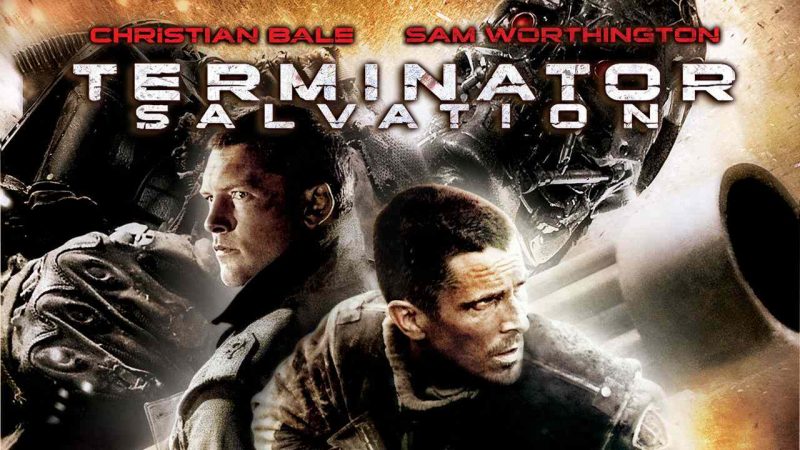
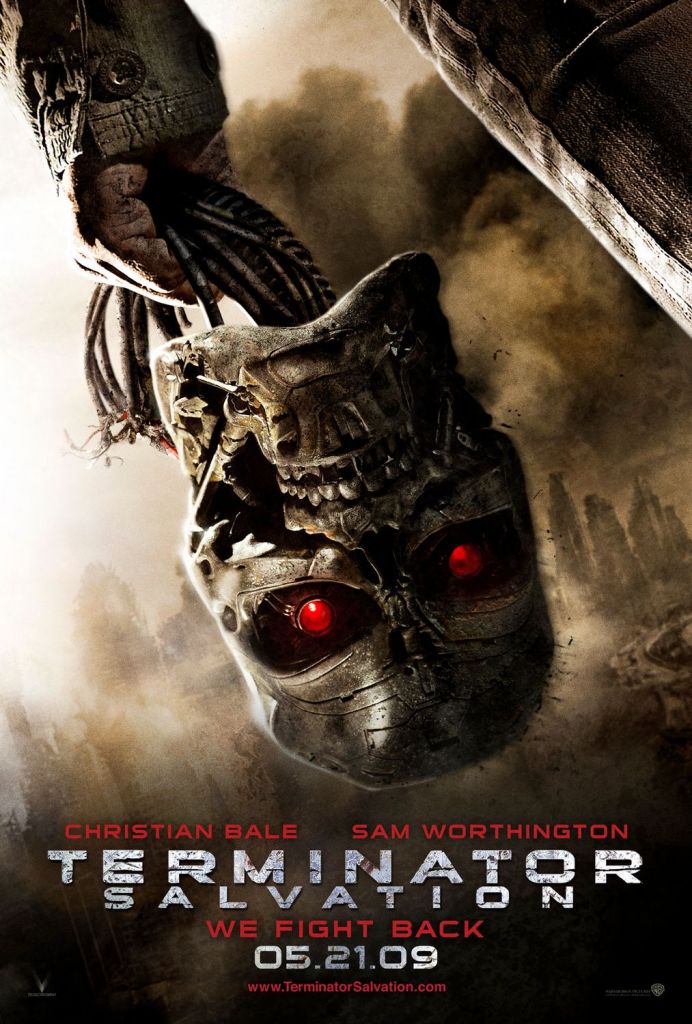
Terminator Salvation is a 2009 American military science fiction action film directed by McG and written by John Brancato and Michael Ferris.
It is the fourth instalment of the Terminator film series and serves as both a standalone sequel to 2003’s Terminator 03: Rise of the Machines and a prequel to 1984’s The Terminator.
The film stars Christian Bale and Sam Worthington, with Anton Yelchin, Moon Bloodgood, Bryce Dallas Howard, Common, Michael Ironside, and Helena Bonham Carter in supporting roles.
In a departure from the previous instalments, Salvation is a post-apocalyptic film set in the year 2018. It focuses on the war between Skynet’s machine network and humanity, as the remnants of the world’s militaries have united to form the Resistance to fight against Skynet’s killing machines. Bale portrays John Connor, a Resistance fighter and central character, while Worthington portrays cyborg Marcus Wright. Yelchin plays a young Kyle Reese, a character first introduced in The Terminator, and the film depicts the origins of the T-800 Terminator.


Outline
In 2003, Dr. Serena Kogan of Cyberdyne Systems convinces death row inmate Marcus Wright to sign over his body for medical research following his execution. Some time later, the automated Skynet system is activated and becomes self-aware; perceiving humans as a threat to its existence, it starts a nuclear holocaust to eradicate them in the event known as “Judgement Day”.
In 2018, John Connor leads an attack on a Skynet base, where he discovers human prisoners and schematics for incorporating living tissue to a new type of Terminator, the T-800. John survives an explosion on the base, which is destroyed. Following John’s departure, Marcus emerges from the base’s wreckage and begins walking towards Los Angeles.
John returns to the Resistance headquarters located aboard a nuclear submarine and is briefed by General Hugh Ashdown that the Resistance has discovered a hidden signal containing a code protocol which they believe can initiate a shutdown of Skynet’s machines. Working on this intelligence, the Resistance plans to launch an offensive against Skynet’s headquarters in San Francisco. It is decided among the Resistance that the offensive will commence in four days, due to an intercepted kill-list created by Skynet, which plans to terminate the Resistance’s command staff within the same time frame. John learns he is second on this list, following Kyle Reese. The Resistance leaders are unaware of Kyle’s importance, but John knows that Kyle will eventually travel back in time and become his father (as seen in The Terminator), and realises that Skynet has learned of this fact.
Arriving at the ruins of Los Angeles, Marcus encounters Kyle and a mute child named Star during a skirmish with Skynet’s machines where Kyle and Star are subsequently abducted and taken prisoner by Skynet. Two Resistance A-10 airplanes are shot down while trying to intercept a machine transport. Marcus locates downed pilot Blair Williams. They then make their way to John’s base, where thereafter, Marcus is wounded by a magnetic land mine. Attempting to save his life, the Resistance fighters discover that Marcus is actually a cyborg, with a mechanical endoskeleton and a partially artificial cerebral cortex. Although Marcus believes himself to be human, John and his wife Kate think that Marcus has been sent to execute him and orders him to be killed. Blair helps Marcus escape. During the pursuit, Marcus saves John’s life from Skynet’s hydrobots and the two make a bargain: Marcus will enter Skynet’s headquarters in San Francisco, to help John rescue Kyle and the other prisoners, if he lets him live.
John pleads with General Ashdown to delay the offensive so he can formulate a plan to extract the human captives, but Ashdown refuses and relieves John of his command. However, the Resistance disobeys Ashdown’s orders and instead await John’s signal. Marcus enters the base, interfaces with the computer, and disables perimeter defences so that Connor can infiltrate the cellblock and release human prisoners. Marcus learns from Skynet (which assumes the form of Dr. Kogan on a screen) that he was resurrected by it and to lure John to the base; when the Resistance launches its attack, John will be killed, achieving the goal that Skynet had failed to accomplish in the past. The hidden signal that the Resistance received earlier is revealed to be a ruse, and Skynet uses it to track down and destroy the command submarine with the Resistance leaders aboard.
Marcus tears out the hardware linking him to Skynet and assists John in battling the new T-800 Model-101 Terminator, while John rigs together nuclear fuel cells. Marcus is soon outclassed in strength and temporarily disabled until John comes to his aid, after which John is stabbed through the chest by the T-800 from behind. Marcus destroys the T-800 by tearing its head off, and he, John, Kyle and Star are airlifted out, after which John destroys the base, thereby crippling Skynet. At a medical centre, as John only barely clings onto life, Marcus offers his own heart for transplantation, sacrificing himself to save John. As he recovers, John radios to other Resistance fighters that, although this battle has been won, the war still continues.
Cast
- Christian Bale as John Connor.
- Director Nichol deemed Bale “the most credible action star in the world” during development.
- Nichol wanted Bale for Marcus, but the actor – even though he “can’t really remember why” – wanted to play John, and that led to the character’s role getting expanded in rewrites of the script.
- Bale was the first person to be cast and signed on for the role in November 2007.
- Nichol talked extensively with Bale in the UK about the role while the latter was filming The Dark Knight, and they both agreed to proceed.
- Although a fan of the Terminator series, he was at first uninterested until Nichol convinced him the story would be character-based and not rely on special effects.
- They kept working on the story every day, along with Worthington.
- Nihcol said Bale broke his hand punching a Terminator prop during filming.
- Bale spent six to eight hours each day with Nichol in the editing room to advise the finished product.
- In January 2018, Bale revealed he rejected the role three times before accepting it, in part to prove people who told him not to take the role wrong.
- Sam Worthington as Marcus Wright, a human-terminator hybrid experiment.
- Worthington compared Marcus to Dorothy (The Wonderful Wizard of Oz) and Alice (Alice’s Adventures in Wonderland) due to being “this person waking up in another world [who then] tries to find himself”.
- Terminator creator James Cameron personally recommended Worthington (whom he directed in Avatar) to Nichol; Russell Crowe also recommended him to Nichol.
- The director decided Worthington looked tougher than the “great many of today’s [waify] young male actors”.
- Worthington recalled Cameron told him “the Terminator to make is the one with the war”.
- Worthington tore his intercostal muscles during the first weeks of filming but nevertheless insisted on performing his own stunts.
- Nichol once expressed interest in casting Christian Bale, Daniel Day-Lewis or Josh Brolin in the part.
- Brolin did talk to Bale and read a draft of the screenplay, which he found “interesting and dark; ultimately, though, I didn’t think it felt right”.
- Anton Yelchin as Kyle Reese, a teenage refugee and admirer of John Connor and the Resistance.
- As portrayed by Michael Biehn in The Terminator, he was sent back in time to 1984 to protect Sarah Connor to ensure the survival of the human race, and fathered John with her.
- Yelchin said he wanted to portray Kyle as Biehn did and not make him appear weaker because it was a younger version of the character.
- The difference in his portrayal lies in showing Kyle as intense, but not concentrated until he joins the resistance proper.
- Yelchin tried to convey Kyle’s intensity by focusing on how fast Biehn appeared when running in the original film.
- Moon Bloodgood as Blair Williams:
- A “no-nonsense and battle-hardened” pilot of the Resistance who suffers from survivor’s guilt and serves as a romantic interest for Marcus.
- Nichol characterises her as continuing the feminine strength that has been prominent throughout the franchise.
- Bryce Dallas Howard as Katherine “Kate” Brewster-Connor:
- The wife of John Connor and daughter of one of Skynet’s creators Robert Brewster.
- Charlotte Gainsbourg was originally set to play the part, but left due to scheduling conflicts with another film.
- As portrayed by Claire Danes in the third film, Kate was a veterinarian; but in this film, she is now a physician.
- Howard suggested, as part of the character’s backstory, that Kate studied medical books and interviewed many surviving doctors after the events of Judgement Day.
- The film’s subject matter reminded her of developing countries, devastated by war and lacking basic supplies such as clean water, which “reflects things that are going on currently in this privileged world that we are living in where there hasn’t been an apocalypse and robots haven’t taken over the world. I think that’s something definitely for us to re-investigate and that we continue to make choices for our own future to take that into consideration”.
- Howard focused on Kate “being accustomed to fear and loss” because the character was a military brat.
- Lonnie Corant Jaman Shuka Rashid Lynn, Jr. (aka Common) as Barnes, John’s right-hand man:
- Common stated the character was not overly developed, being “only just a bad-ass character, you know, really the big heavy of the movie”, before Nichol’s intervention.
- Common agreed with this, as “I didn’t want to just be the big, bulky guy there” and worked on the emotional side, “thinking about how it would be in a world that’s post-apocalyptic, a world where, you know, things have been destroyed and we’re really fighting for survival.”
- Jane Alexander as Virginia, the leader of a group of human refugees.
- Helena Bonham Carter as Dr. Serena Kogan / Skynet:
- An ex-Cyberdyne scientist who convinces Marcus to donate his body for her research.
- Her face is later used by the Skynet computer to communicate with Marcus.
- Tilda Swinton was originally considered for the part, but Bonham Carter replaced her before filming.
- She accepted the part because her then-domestic partner, Tim Burton, was a Terminator fan.
- Her role was a “small but pivotal” one and would only require ten days of shooting.
- However, on 20 July 2008, Bonham Carter delayed filming by a day, and was given an indefinite leave due to the death of four of her family members in a minibus accident in South Africa.
- Michael Ironside as General Hugh Ashdown, the leader of the Resistance.
- Roland Kickinger/Arnold Schwarzenegger as T-800:
- The first Terminator covered in living tissue.
- Bodybuilder and actor Kickinger, who previously portrayed Schwarzenegger in the 2005 biographical film See Arnold Run, was his physical double on set.
- When asked about his role, Kickinger said it is “Arnold’s character in the first Terminator. That’s basically my role, but 20 years before, so it establishes how the Terminator came about.”
- Polish strongman athlete Mariusz Pudzianowski was also considered for doubling Schwarzenegger.
- If Schwarzenegger had decided not to lend his appearance to the film, then John would have shot the T-800’s face off before the audience got a good look at him.
- Arnold Schwarzenegger’s facial likeness was recreated with CGI, with a mold of his face made in 1984 scanned to create the digital makeup.
- Schwarzenegger gave his consent to appear this way, due to being unavailable because he was serving as Governor of California.
- Jadagrace Berry as Star:
- An 8-year-old girl in Kyle’s care.
- Born after Judgement Day, Star is mute due to the trauma of the post-apocalyptic world.
- Therefore, this has given her the unnatural ability to sense when a Skynet unit is approaching.
- Brian Steele as the T-600.
- Linda Hamilton as the uncredited voice of Sarah Connor.
- In the two scenes of the film, where John Connor played Sarah’s recording tapes.
Production
Development
In 1999, two years after C2 Pictures purchased the rights, two Terminator films’ premises were mapped out and were supposed to be developed simultaneously. Tedi Sarafian was hired to write Terminator 03: Rise of the Machines, which he eventually received shared story credit for, while David C. Wilson was to write Terminator 04. Before any revisions were done, T3 initially took place in 2001 and revolved around the first attacks between Skynet and humans. T4 would follow immediately afterwards and centred primarily on the war briefly seen in the first two films. Warner Bros. gave the film the codename “Project Angel”.
Following the release of Terminator 03 in 2003, producers Andrew G. Vajna and Mario Kassar contracted Nick Stahl and Claire Danes to return as John Connor and Kate Brewster in another film. Director Jonathan Mostow helped develop the script, written by John Brancato and Michael Ferris, and was set to begin production in 2005 after completing another film. It was known by then that Arnold Schwarzenegger’s role would be limited, as he had assumed office as Governor of California. The producers sought to have Warner Bros. finance the picture as they did for Terminator 03. In 2005, Stahl said John and Kate would be recast as the story jumped forward in time. By 2006, Metro-Goldwyn-Mayer (a successor to Orion Pictures and current owners of the Hemdale Film Corporation library, distributor and producer of the original film, respectively) was set to distribute the fourth film as part of the new CEO Harry Sloan’s scheme to make the studio a viable Hollywood player.
On 09 May 2007, it was announced that production rights to the Terminator series had passed from the feuding Vajna and Kassar to the Halcyon Company. The producers hoped to start a new trilogy. The purchase was financed with a loan by Pacificor, a hedge fund from Santa Monica. By 19 July, the project was in legal limbo due to a lawsuit between MGM and Halcyon subsidiary T Asset. MGM had an exclusive window of 30 days to negotiate for distribution of the Terminator films. When negotiating for Terminator 04, Halcyon rejected their initial proposal, and MGM suspended negotiations. After the 30 days were over, MGM claimed that the period during which negotiations were suspended did not count and their exclusive period was still open. Halcyon asked a court for an injunction allowing them to approach other distributors. Later, the lawsuit was settled and MGM got a 30-day right of first refusal to finance and distribute the fifth Terminator film.
Finally, Warner Bros. paid $60 million to acquire the United States distribution rights of Terminator Salvation; Sony Pictures also paid just over $100 million to acquire this film’s distribution rights in all international territories.
Filming
With an estimated $200 million budget, Terminator Salvation is the most expensive Terminator film to date, followed closely by Terminator: Dark Fate (2019) (estimated budget $185-$196 million). The shooting of the film started on 05 May 2008, in New Mexico, with parts of the filming taking place at Kirtland Air Force Base, after the United States Air Force agreed to provide the crew guidance and aircraft. The filmmakers had originally intended to begin filming on 15 March in Budapest or Australia, but a 25 percent tax rebate and absence of an interest rate cap and floor made the filmmakers seek the cheaper New Mexico, because of their elevated budget. To avoid delays caused by a possible 2008 Screen Actors Guild strike in July, all exterior scenes were completed by then, so production could restart easily. The shoot ended on 20 July 2008, though some pick-ups took place in January 2009.
In addition to Bale breaking his hand and Worthington hurting his back, special effects technician Mike Menardis almost lost his leg filming an explosion. The sequence required a manhole cover being blown into the air, which hit Menardis and partially severed his leg. Nichol noted it was a testament to the gritty style of the film. “I say with respect, I didn’t want that Star Wars experience of everything’s a blue screen, tennis balls, and go for it. I had Stan Winston build all the machines. We built all the sets, the explosive power, the explosive power so you feel that wind and that percussion and that heat blowing your eyebrows off. And with that, you get a couple bumps and bruises on the way, but you get it in an integrity and a realism that hopefully echoes Apocalypse Now. You couldn’t say, ‘Let’s just shoot Apocalypse Now in Burbank, I think it’s going to feel just as good.’”
The film used Technicolor’s Oz process during post-production. This is a partial silver retention on the interpositive, similar to bleach bypass, which will be used to lend to the sense of detachment from the modern world McG was looking for. Industrial Light & Magic developed shader programmes to make the desaturated lighting of the CGI realistic and well-integrated to the on-set footage. The filmmakers consulted with many scientists about the effects of an abandoned world and nuclear winter. McG cited Mad Max 2, the original Star Wars trilogy and Children of Men, as well as the novel The Road, as his visual influences. He instructed his cast to read the latter as well as Do Androids Dream of Electric Sheep? Like Children of Men, Nichol would storyboard scenes so that it would be edited together to resemble a seamless, continuous shot. It took two weeks to film a two-minute shot of Connor getting caught up in a bombing on the Skynet base where he discovers plans for the T-800.
Special Effects
Nichol sought to create as many “in-camera” elements as possible to make the film more realistic. Many of the settings were hand-built, including an entire gas station for the Harvester attack scenes. The Terminator factory was built in an abandoned factory, and the design crew consulted robot manufacturer companies for a more realistic depiction. A 20-foot-tall (6.1 m) model built and detonated by Kerner Optical was used for the explosion of Skynet’s 30-story San Francisco-based lab.
The majority of the machines were designed by Martin Laing, a crew member on Cameron’s Titanic and Ghosts of the Abyss. Nichol described many of the machines as having an H. R. Giger influence. Nichol intent was to create a gritty, tactile 2018 on screen, and Laing concurred the robots would have to be black and degraded as none of them are new. Laing devised Aerostats, which are smaller versions of the Aerial Hunter Killers from the previous films. The Aerostats send a signal to the 60-foot-tall (18 m) humanoid Harvesters. They are very big and slow, so they use Mototerminators to capture humans, and the Harvesters place them in Transporters. Laing was unsure of how to design the Transporters until he saw a cattle transport while driving through Albuquerque.
The film features the first aquatic Skynet robot, the Hydrobot, which Laing modelled on eels, and was built by the animatronics crew with its exterior made of metal-looking rubber so it could be used in the aquatic scenes.
The film features rubber-skinned T-600 and T-700 robots. Nichol interpreted Kyle Reese’s description in the original film of the T-600 as being easy to spot by making them tall and bulky. For scenes of humans fighting with Terminators, the actors interacted with stuntmen wearing motion capture suits, later replaced by digital robots. For the Moto-Terminators, Ducati designers were hired to create the robots, and the on-screen robot was a combination of stuntmen driving actual Ducatis and a Moto-Terminator mock-up, as well as a digital Moto-Terminator. Visual effects studio Imaginary Forces created the Terminator point-of-view sequences, and tried to depict a simple interface, “free of the frills – anything that a machine would not purely need”, and with more software bugs and anomalies since the robots of Salvation were not as advanced as the Terminators from the previous films.
The majority of the special effects were done by Industrial Light & Magic. Salvation was one of the last films that Stan Winston, the visual effects supervisor on the first three films, worked on. Winston died on 15 June 2008, after a long struggle with multiple myeloma. Nichol dedicated the film to him in the end credits. John Rosengrant and Charlie Gibson replaced Winston, and Nichol commented that they are “trying to achieve something that’s never been done before” and “push the envelope”. Asylum Visual Effects created digital plates, Marcus’ endoskeleton, and a digital T-600. Rising Sun Pictures did the digital correction of day for night scenes, the destruction of the submarine and Marcus’ robot hand.
Music
Danny Elfman began composing the score in January 2009. Beforehand, McG wanted to hire Gustavo Santaolalla to work on the music for the human characters, while having either Thom Yorke or Jonny Greenwood for Skynet’s themes. He wanted to discuss scoring the film with Hans Zimmer but he was unable to arrange a meeting. Nichol met with the original Terminator composer Brad Fiedel but was not interested in repeating the sounds Fiedel achieved in his films. However, Nichol wanted Elfman to give those themes and ambient sounds a “Wagnerian quality”.
Reprise Records released the soundtrack on 19 May 2009, which included 15 tracks. While Common had expressed interest in writing a song for the soundtrack, Alice in Chains’ “Rooster” is the only featured song. Although not included in the soundtrack, “You Could Be Mine” by Guns N’ Roses, which was featured in Terminator 02: Judgement Day, can be heard briefly in a scene of the film as well.
All music is composed by Danny Elfman except Rooster.
Controveries
During filming, Bale became angry with director of photography Shane Hurlbut for walking onto a set during a scene; he swore and screamed at Hurlbut and threatened to leave the film. Audio of Bale’s tirade leaked to the public and went viral. Bale apologised publicly and said he resolved his differences with Hurlbut, stating that he sometimes has a problem with someone walking on set, and that when the incident took place they continued to work together for a number of hours that day. A satirical dance remix song based on this incident titled, “Bale Out” was created by composer Lucian Piane.
In March 2009, producer Moritz Borman filed a lawsuit against the Halcyon Company, seeking $160 million. Borman, who had arranged the transfer of the Terminator rights to Halcyon in May 2007, claimed the company’s two managers, Derek Anderson and Victor Kubicek, had “hijacked” the production and refused to give him his $2.5 million share of the production. Borman alleged budget overruns were the reasons Anderson and Kubicek did not pay him and that they had $1 million in debt. Nevertheless, an “amicable” resolution was reached a month later.
Further complications occurred on 20 May 2009, when executive producer Peter D. Graves, who informed Anderson and Kubicek about the Terminator rights, filed a breach-of-contract claim for arbitration, alleging that they owe him $750,000.
In May 2020, composer Brad Fiedel, who was responsible for the cues to the first two films, revealed that Nichol contacted him in the post production phase and requested Fiedel contribute a score to the picture. After seeing the picture and meeting Nichol, Fiedel expressed some ambivalence about the film’s quality. Consequently, he was not chosen to score Salvation and the job instead went to Danny Elfman.
Home Media
The DVD and Blu-ray Disc of the film was released on 01 December 2009. The DVD contains the theatrical cut of the film with a featurette on the Moto-Terminators. The Blu-ray features both the theatrical cut and the R-rated Director’s cut, which is three minutes longer (118 minutes), with bonus material including Maximum Movie Mode, a video commentary in which director Nichol talks about the film while it plays, featurettes, a video archive, and a digital comic of the first issue of the official film prequel comic. Both versions include a digital copy of the theatrical cut for portable media players. Target Stores will be the only retailer to carry the Director’s Cut on DVD. On its first week of retail, Terminator Salvation debuted at the top spot of the Blu-ray charts, and second in the DVD charts, behind Night at the Museum: Battle of the Smithsonian. The film made $29,811,432 in domestic DVD sales bringing its total gross to $401,439,971. In 2019, Sony Pictures Home Entertainment released the film in Ultra HD Blu-ray in Europe and Australia.
Tie-Ins
In addition to the novelisation by Alan Dean Foster, a prequel novel titled Terminator Salvation: From the Ashes by Timothy Zahn was released. Two further books were inspired by the film Cold War by Greg Cox and Trial by Fire, again by Zahn. IDW Publishing released a four-issue prequel comic, as well as an adaptation. It follows Connor rallying together the resistance in 2017, as well as examining normal people overcoming their intolerances to defeat Skynet. Dark Horse Comics released a twelve-issue sequel comic to the film, titled Terminator Salvation: The Final Battle by J. Michael Straczynski from 2013 to 2014. Playmates Toys, Sideshow Collectibles, Hot Toys, Character Options, and DC Unlimited produced merchandise, while Chrysler, Sony, Pizza Hut, and 7-Eleven were among the product placement partners. On 23 May 2009, a roller coaster named after the film opened at Six Flags Magic Mountain. In 2011, the ride was no longer licensed and renamed as Apocalypse: The Ride.
A third-person shooter video game of the same name was released on the same week of the release of the film. Christian Bale declined to lend his voice, so Gideon Emery voiced the character of John Connor. The game, however, features the voices of Common and Moon Bloodgood as Barnes and Blair Williams, respectively. Despite not appearing in the film, Rose McGowan voiced the character of Angie Salter, an ex-high school teacher. The game is set in 2016, after the events of Terminator 03: Rise of the Machines and before the events of Terminator Salvation. Another video game also titled Terminator Salvation was released in 2010 in the arcades. It is a light gun shooter developed by Play Mechanix and published by Raw Thrills.
On 18 May 2009, Machinima released Terminator Salvation: The Machinima Series, an animated prequel web series set before the video game, comprising six episodes. Set after Judgement Day, Blair Williams (again voiced by Bloodgood) is fighting the war against the machines in downtown Los Angeles, while tracking down the computer hacker named Laz Howard (voiced by Cam Clarke) and trying to pursue him to join sides with the resistance. The series was created using real-time computer animation from the video game. It was distributed by Warner Premiere, produced by Wonderland Sound and Vision and The Halcyon Company and was released on DVD on 03 November 2009.
Cancelled Sequels and Animated Reboot
While Terminator Salvation was initially intended to begin a new trilogy, production of a fifth film was halted by legal trouble, as well as The Halcyon Company filing for Chapter 11 bankruptcy protection. While some anonymous sources insisted that Terminator 5 would be moving forward, the majority of analysts predicted that its future was in jeopardy.
In late September 2009, it was announced that the rights to the franchise were once again up for sale as The Halcyon Company tried to pull itself out of bankruptcy. In late October 2009, Halcyon announced it would auction off the rights to future Terminator material and was seeking $60–70 million, though the only offer made was by director Joss Whedon for $10,000. In December 2009, Halcyon issued a statement saying that they were looking at various options including sale and refinancing of the rights with an announcement on the outcome no later than 01 February 2010. On 08 February 2010, an auction was held to determine the owner of the Terminator rights. After studios Sony Pictures and Lionsgate bid separately, Pacificor, the hedge fund that pushed Halcyon into bankruptcy, made a deal for $29.5 million. Pacificor hired an agency to sell off the rights to the franchise.
In August 2010, it was reported that a new Terminator film was being developed. The new film would not be a direct sequel to Salvation, but rather an animated reboot of the original series. It would have been entitled Terminator 3000 and would be shot by Hannover House. However, Pacificor, the owner of the rights to the Terminator franchise, had not given any official license to Hannover House to develop a new film.
On 16 February 2011, it was announced that Universal Studios was considering a fifth Terminator film with Arnold Schwarzenegger returning as the star and with Fast Five’s Justin Lin directing along with Chris Morgan as the screenwriter. The discussions for the film had been in the very early stages. On 27 April 2011, it was announced that a rights package to a Terminator film, to which Schwarzenegger, Lin, and producer Robert W. Cort were attached, but no screenwriter, had been circulating among the studios. Universal, Sony and Lionsgate, and CBS Films had been some of the interested companies. According to sources close to Schwarzenegger, he had only wanted to commit fully if a good script could be created.
It was reported on 13 May 2011, that Megan Ellison and her production company Annapurna Pictures won the rights to make at least two more Terminator films, including Terminator 5, in an auction deal that is rumoured to have hit the $20 million mark. While Schwarzenegger was claimed to be up for a substantial role, the film would not be anchored by him; instead, a young male actor would take the lead. On 04 December 2012, a year and a half after negotiations were entered, the deal was finally closed. Ellison said that she and her brother David Ellison were “starting from scratch as they seek out a screenwriter to plot the end”.
Trivia
- After a troubled pre-production, with The Halcyon Company acquiring the rights from Andrew G. Vajna and Mario Kassar, and several writers working on the screenplay, filming began in May 2008 in New Mexico, and ran for 77 days.
- Terminator Salvation was released on 21 May 2009 by Warner Bros. Pictures in North America and by Columbia Pictures internationally, and grossed over $371 million worldwide and received mixed reviews.
- Salvation was intended to be the first instalment of a second Terminator trilogy, but The Halcyon Company filed for bankruptcy, and the sequels were cancelled.
- The franchise rights were sold in 2012, eventually resulting in the 2015 film Terminator Genisys, intended to be a reboot and the first of another planned trilogy.
- Those plans were scrapped, and in 2019, Terminator: Dark Fate continued the original saga as a direct sequel to Terminator 02: Judgement Day.
Terminator Series
- Overview of the Terminator Franchise.
- Overview of Terminator Films.
- Overview of Terminator TV Series.
Production & Filming Details
- Director(s): Joseph McGinty Nichol.
- Producer(s): Derek Anderson, Moritz Borman, Victor Kubicek, and Jeffrey Silver.
- Writer(s): John Brancato and Michael Ferris.
- Music: Danny Elfman.
- Cinematography: Shane Hurlbut.
- Editor(s): Conrad Buff.
- Production: Columbia Pictures, The Halcyon Company, and Wonderland Sound and Vision.
- Distributor(s): Warner Bros (North America) and Sony Pictures Releasing (International).
- Release Date: 21 May 2009 (US).
- Running Time: 115 minutes.
- Rating: PG-13.
- Country: US.
- Language: English.
Video Link


 Military Gogglebox
Leave a comment