
Introduction
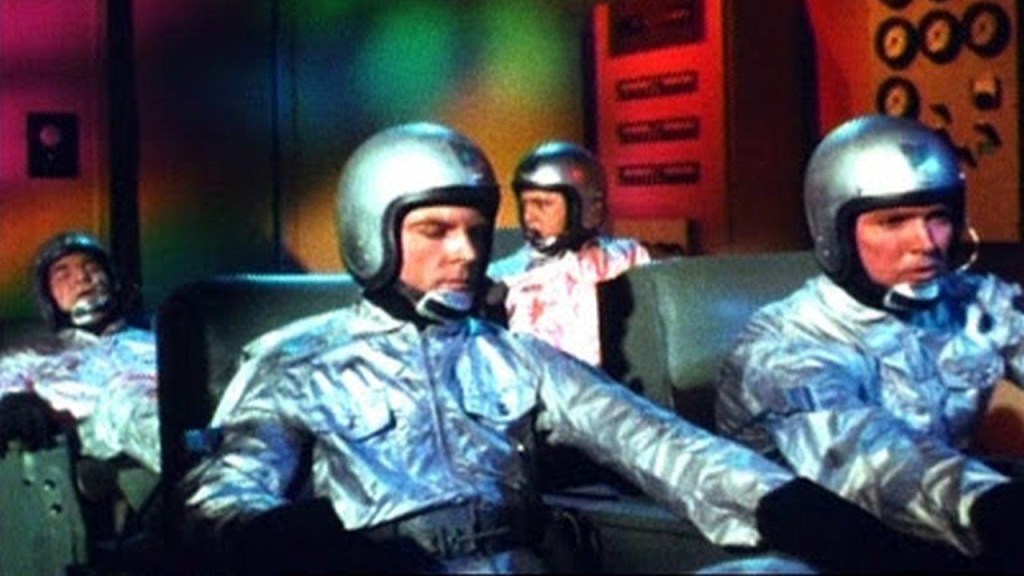
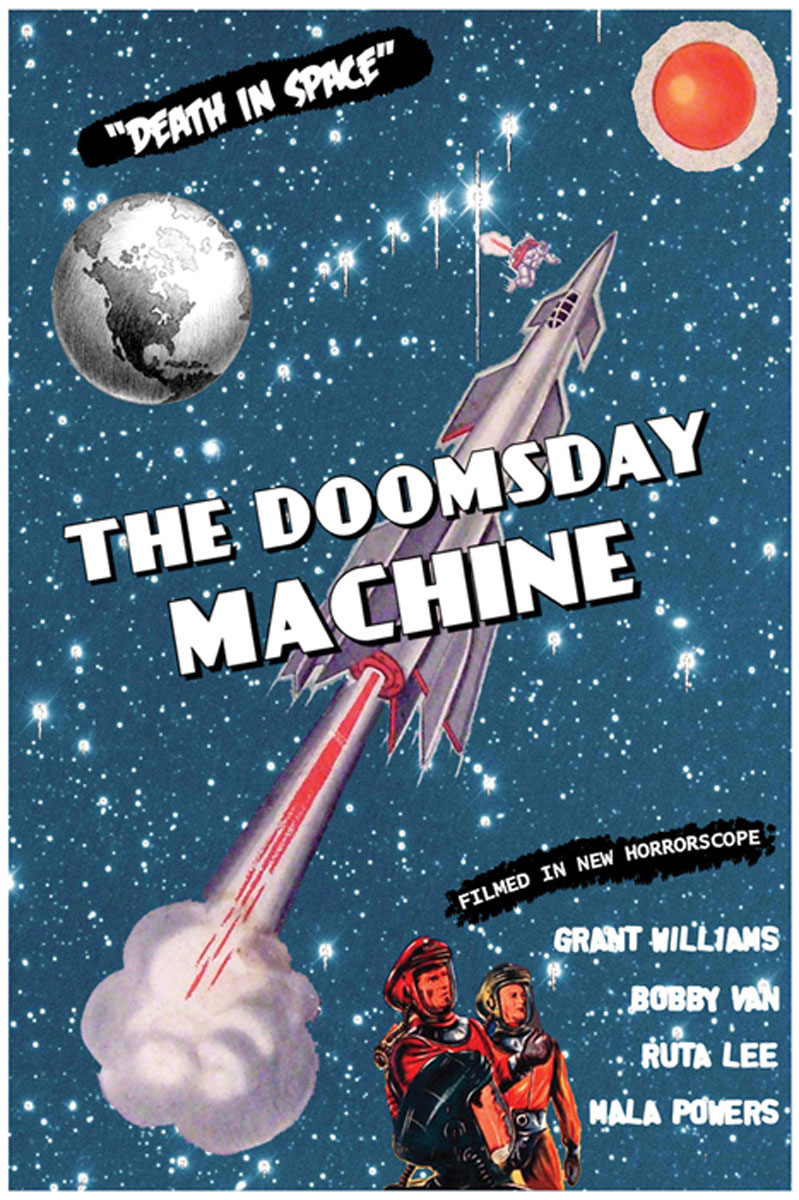
The Doomsday Machine is an American science fiction film filmed in 1967 but completed without the original cast or sets in 1972.
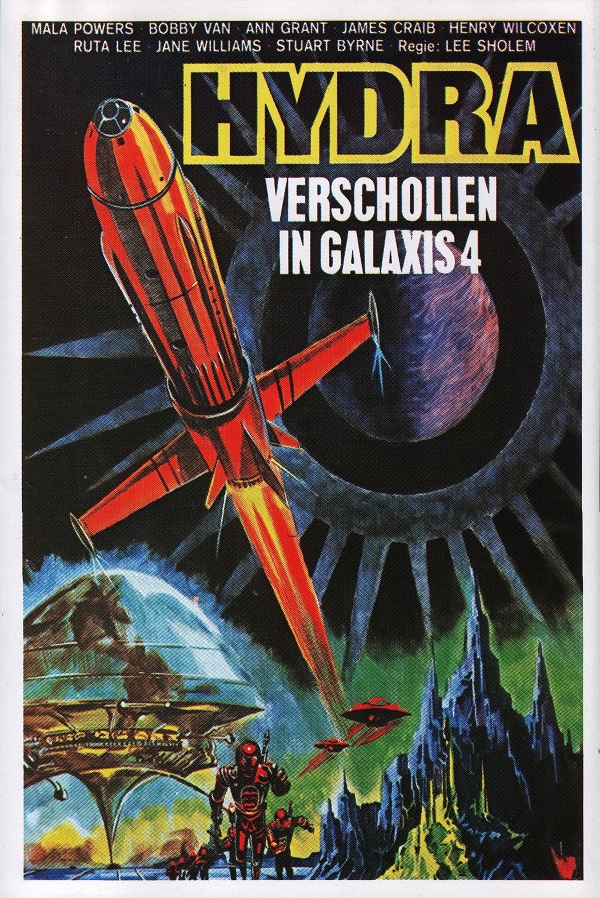
Also known as Escape from Planet Earth (US, video title), Hydra – Verschollen in Galaxis 4 (West Germany), and Armageddon 1975 (West Germany).
Outline
A spy (Essie Lin Chia) discovers that the Chinese government has created a doomsday device (the “key” to which, “only Chairman Mao has”) capable of destroying the Earth and it will be activated in 72 hours. Soon after, Astra – a two-year return mission to Venus by the United States Space Programme – has its time of launch speeded up and half of the male flight crew are replaced by women shortly before take-off, including one Russian. Shortly before blastoff military alerts are put into effect.
After leaving Earth, the seven crew members of Astra deduce that they have been put together to restart the human race should the Chinese activate their device. Shortly after this, the device goes off and Earth is destroyed.
As Astra continues to Venus, the crew realises that a safe landing on Venus is impossible unless the crew is reduced to three. One of the crew members tries to rape another, at which point she accidentally gets them both blown out of an airlock.
Two more crew-members – Danny and Major Bronski – are lost as they head out to repair a fault with the spaceship. However, they notice another spacecraft nearby and jump to it. The second craft proves to be a lost Soviet ship that disappeared and was piloted by a close friend of the Russian crew member. Though its pilot is dead, Danny and Bronski successfully power up the Soviet ship. Before the two ships can rendezvous, contact with Astra is lost.
A disembodied voice cuts in, claiming to be the collective consciousness of the Venusian population. The voice informs the survivors (whom the Venusians refer to as the “Last of Man”) in the Russian ship that Astra no longer exists (presumably destroyed somehow by the telepathic Venusians), and that no humans (due to their “self-destructive” potential) will be allowed to reach Venus. It gives a cryptic message regarding the prospect of starting new life in a “very strange and very great” place, somewhere far “beyond the rim of the universe,” before the ship suddenly blasts off, apparently by the power of the Venusians, and the movie abruptly concludes.
Cast
- Bobby Van as Danny.
- Ruta Lee as Dr. Marion Turner.
- Mala Powers as Major Georgianna Bronski.
- James Craig as Dr. Haines.
- Grant Williams as Major Kurt Mason.
- Henry Wilcoxon as Dr. Christopher Perry.
- Essie Lin Chia as Girl Spy.
- Casey Kasem as Mission Control Officer.
- Lorri Scott as Lieutenant Katie Carlson.
- Denny Miller as Colonel Don Price.
- Mike Farrell as 1st Reporter.
Production
Production of The Doomsday Machine began in 1967 under Herbert J. Leder’s direction under the titles Armageddon 1975 and Doomsday Plus Seven. Production stopped on the film before it was completed (presumably due to funding problems), but the rights to the film were eventually purchased and the film was completed in 1972, albeit without the original cast members, costumes or sets.
Sloppy production standards have made the film a favourite for buffs of bad cinema. The film relies extensively on stock footage, including real (but badly degraded) NASA rocket footage, special effects shots from David L. Hewitt’s The Wizard of Mars (1965) (Hewitt receives a special effects credit for Doomsday Machine), Gorath (1962) and other disparate sources, leading to numerous, glaring continuity errors. Among such persistent mistakes is the external appearance of the Astra, which inexplicably changes throughout the film. The painfully protracted last segment of the movie – with an American and Russian astronaut boarding a derelict Soviet spacecraft – was obviously shot after the unfinished principal photography without the participation of the original actors. After this point, the characters stay in their spacesuits, which look different from those shown in the immediately preceding scenes, and their helmets are now opaque, concealing the doubles’ faces. The characters speak, but in completely different voices than before, the Russian no longer even having an accent. The slow, repetitive pacing of this sequence is also markedly different from the rest of the film and suggests an effort to pad the film’s running time out in order to reach a desired length.
Trivia
- The climax was originally meant to take place on the surface of Venus but the production simply didn’t have enough money for that.
- Instead, the ending was hastily rewritten to be set inside a spaceship.
- The cutting tool that Danny (Bobby Van) carries with him in his final scene is a Zero-M Sonic Blaster, a spy toy made by Mattel in 1966.
- This film uses several special effects shots from Gorath (1962) (including most of the exterior shots of space flight involving the ship and other space stations).
- Many of the other shots of both the spacecraft (showing a completely different craft than featured in the “Yosei Gorasu” footage) and interior shots of television screens are taken from The Wizard of Mars (1965).
Production & Filming Details
- Director(s):
- Harry Hope.
- Lee Sholem.
- Herbert J. Leder … (uncredited).
- Producer(s):
- Harry Hope … producer.
- Oscar Nichols … executive producer (as Oscar L. Nichols).
- Writer(s):
- Stuart J. Byrne … (original story and screenplay).
- Music:
- Cinematography:
- Stanley Cortez … director of photography.
- Editor(s):
- Production:
- Distributor(s):
- Release Date: 1972.
- Rating: Not Rated.
- Running Time: 83 minutes.
- Country: US.
- Language: English.


 Military Gogglebox
Leave a comment