
Introduction
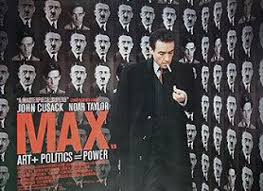
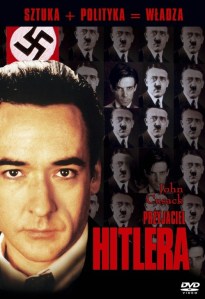
A film studying the depiction of a friendship between an art dealer named Rothman and his student, Adolf Hitler.
Outline
Munich, 1918. German-Jew Max Rothman has returned to much of his pre-war life which includes to his wife Nina and their two children, to his mistress Liselore von Peltz, and to his work as an art dealer.
He has however not returned to being an aspiring painter as he lost his dominant right arm during the war.
He is approached by an aspiring painter, a thirty-year old Austrian war veteran named Adolf Hitler, who wants him to show his works. Although he does not think the paintings are all that original and he does not really like Hitler as a person, Rothman takes Hitler under his wings if only because of their camaraderie of being war veterans, and knowing that Hitler had nothing and no one to come back to after the war unlike himself.
Rothman believes that Hitler has promise if only he can find his original artistic point of view. In part out of need for money, Hitler, on the urging of Captain Karl Mayr, agrees to work for the army as a political spokesman in anti-Semitic propaganda
Trivia & Goofs
- To help get this controversial movie financed, producer/star John Cusack took no salary for acting in the lead role.
- Writer/director Menno Meyjes reports that before the script was written, Steven Spielberg’s Amblin company was interested in the project. But Spielberg told Meyjes he couldn’t bring himself to help make a movie he thought would dishonour Holocaust survivors. Nevertheless, he considered the script an excellent one and encouraged the director to push for its realisation, but without Amblin.
- Noah Taylor would later play Adolf Hitler again on the TV series ‘Preacher’ (2016).
- The family gathers to listen to the reports of the Armistice Agreement Terms (November 1918) on a radio. However, broadcasting in Germany did not start until 1923 and was strictly experimental and limited before that.
- The carpet in Max’s house is an IKEA model from 2003.
- There are two white IKEA floor paper lamps. IKEA was founded in 1943.
- The cigarette lighter used by Max is a type that did not exist until after WWII.
- During an early scene in the steelworks/gallery a worker is shown cutting up a locomotive for scrap. He is using an arc welder which was not in use until the second world war.
- Amongst the drawings of Adolf Hitler’s ‘future world’ at the end of the film, there are at least two buildings (including the Volkshalle, which was never built) actually designed by Albert Speer, who did not meet Hitler until 1930.
- Hitler became a vegetarian 13 years later, in 1931.
- The NSDAP did not exist in 1918. Hitler changed the party name DAP for NSDAP two years later – in 1920.
- When Max sees Adolf Hitler for the first time, he correctly calls him ‘Corporal’, but the uniform Hitler is wearing has no rank insignia. German Army uniforms in both world wars displayed NCO ranks on the collar.
- When Captain Mayr invites Adolf Hitler to speak in front of the Nationalist Socialist Party, he mentions that they number “500 men or so”. The party actually only had around 50 members at this time and Hitler was given the number 555 when he became a member simply because the numbering system started at 500.
Production & Filming Details
- Directer: Menno Meyjes.
- Writer: Menno Meyjes..
- Producer: Andras Hamori.
- Music: Dan Jones.
- Cinematography: Lajos Koltai.
- Production: Pathe Pictures, Alliance Atlantis, UK Film Council, Kinowelt Medien, Aconit Pictures, and H2O Motion Pictures.
- Distribution: Lionsgate.
- Release Date: 20 September 2002 (Toronto International Film Festival), 20 June 2003 (UK), and 25 September 2003 (Hungary).
- Running time: 106 minutes.
- Country: UK, Hungary, and Canada.
- Language: English.
YouTube Link



Leave a Reply