
Introduction
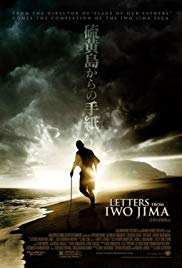
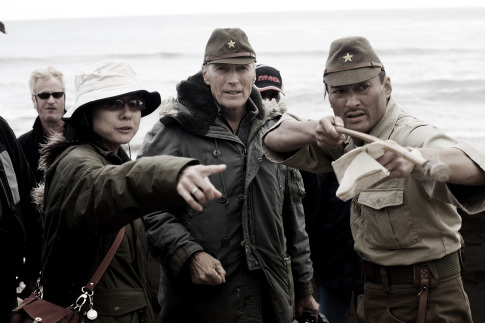
Letters from Iwo Jima (硫黄島からの手紙 Iōjima Kara no Tegami) is a 2006 Japanese language American war film directed and co-produced by Clint Eastwood, starring Ken Watanabe and Kazunari Ninomiya.
The film portrays the Battle of Iwo Jima from the perspective of the Japanese soldiers and is a companion piece to Eastwood’s Flags of Our Fathers, which depicts the same battle from the American viewpoint; the two films were shot back to back.
Letters from Iwo Jima is almost entirely in Japanese, although it was produced by American companies DreamWorks, Malpaso Productions, and Amblin Entertainment.
After Flags of Our Fathers under-performed at the box office, Paramount Pictures swapped the United States distribution rights to Warner Bros., who had the international rights.
Outline
In 2005, Japanese archaeologists explore tunnels on Iwo Jima, where they find something in the dirt.
The scene changes to Iwo Jima in 1944. Private First Class Saigo and his platoon are digging beach trenches on the island. Meanwhile, Lieutenant General Tadamichi Kuribayashi arrives to take command of the garrison and immediately begins an inspection of the island defences. He saves Saigo and his friend Kashiwara from a beating by Captain Tanida for ‘unpatriotic speeches’, and orders the men to begin tunneling underground defences into Mount Suribachi. Kuribayashi and Lieutenant Colonel Baron Takeichi Nishi, a famous Olympic gold medalist show jumper, clash with some of the other officers, who do not agree with Kuribayashi’s defence in depth strategy: Kuribayashi believes the US will take the beaches quickly, and that the mountain defenses will have a better chance for holding out.
Poor nutrition and unsanitary conditions take their toll; many die of dysentery, including Kashiwara. The troops begin using the caves. Kashiwara’s replacement, Superior Private Shimizu, arrives for duty. Saigo suspects that Shimizu is a spy from the Kempeitai sent to report on disloyal soldiers.
Soon, American aircraft and warships begin to appear and bombard the island, causing significant casualties. A few days later, the US Marines land. The American troops suffer heavy casualties, but the beach defences are quickly overcome, as Kuribayashi predicted, and the attack turns to the positions on Mount Suribachi. While delivering a request for more machine guns from his commander to the Suribachi garrison, Saigo overhears Kuribayashi radioing orders to retreat. The commander, however, ignores the General and instead orders his company to commit suicide. Saigo runs away with Shimizu, convincing him to continue the fight rather than die. They find two other soldiers, but one is incinerated by an American flamethrower, and they witness a captured Marine being bayoneted to death.
Saigo and the soldiers in Mount Suribachi try to flee with Lt. Colonel Oiso at night, but they run into Marines, who wipe out all except Saigo and Shimizu. They flee to friendly lines, but are accused by Lieutenant Ito of desertion. Ito raises his katana to execute them for cowardice, but Kuribayashi arrives and saves Saigo again by confirming his order to retreat.
The Japanese attack US positions but take heavy losses. The survivors are told to regroup with Colonel Nishi while Ito heads to the US lines with three mines, intending to throw himself under a tank. Nishi converses in English with a captured Marine, Sam, until Sam eventually dies from his wounds. Later, blinded by shrapnel, Nishi orders his men to withdraw and asks Lieutenant Okubo to leave him a rifle. Upon leaving, the soldiers hear a gunshot from Nishi’s cave.
Saigo plans surrender, and Shimizu reveals that he was dishonorably discharged from the Kempeitai because he disobeyed an order to kill a civilian’s dog. Shimizu escapes and surrenders to Americans, but is later shot dead by his guard. Meanwhile, Ito, desperate and malnourished, breaks down and, when found by the US Marines, surrenders. Okubo is killed as he and his men arrive at Kuribayashi’s position. Saigo meets up with Kuribayashi, and one last attack is planned. Kuribayashi orders Saigo to stay behind and destroy all documents, including his own letters, saving Saigo’s life a third time.
That night, Kuribayashi launches a final surprise attack. Most of his men are killed, and Kuribayashi is critically wounded, but Kuribayashi’s loyal aide Fujita drags him away. The next morning, Kuribayashi orders Fujita to behead him; however, Fujita is shot dead by a Marine sniper before he can do so. Saigo appears, having buried some of the documents and letters instead of burning them all. Kuribayashi asks Saigo to bury him where he will not be found, then draws his pistol, an American M1911 – a gift Kuribayashi was given in the US before the war – and commits suicide. A tearful Saigo then buries him.
Later, a US patrol find Fujita’s body. One Marine officer finds Kuribayashi’s pistol and tucks it under his belt. They search the area and find Saigo with his shovel. Seeing the pistol in the Marine Lieutenant’s belt, Saigo becomes furious and attacks the Americans with his shovel. Too weak to fight, he is knocked unconscious and taken to the POW beach. Awakening on a stretcher, he glimpses the setting sun and smiles grimly.
Back in 2005, the archaeologists complete their digging, revealing the bag of letters that Saigo had buried, and open it. As the letters spill out, the voices of the Japanese soldiers who wrote them resound.
Film Inspiration
Picture Letters from Commander in Chief by Tadamichi Kuribayashi (author) and Tsuyuko Yoshida (editor).
Production & Filming Details
- Director: Clint Eastwood.
- Producers: Clint Eastwood, Robert Lorenz, and Steven Spielberg.
- Screenplay: Iris Yamashita.
- Story: Iris Yamashita and Paul Haggis.
- Music: Kyle Eastwood, and Michael Stevens.
- Cinematography: Tom Stern.
- Editors: Joel Cox and Gary D. Roach.
- Production: DreamWorks Pictures, Malpaso Productions, and Amblin Entertainment.
- Distributors: Warner Bros (US/Japan) and Paramount Pictures (International).
- Release Date: 09 December 2006 (Japan) and 20 December 2006 (US).
- Running time: 140 minutes.
- Country: US.
- Language: Japanese.
YouTube Link


 Military Gogglebox
Leave a comment