
Introduction
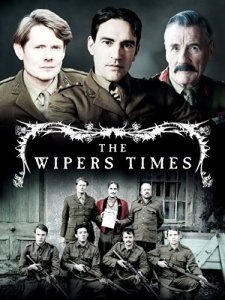
This is the WWI story of Captain Fred Roberts who found a printing press in the ruins of Ypres and started publishing the satirical journal, `The Wipers Times’, that went on to become a huge success.
Outline
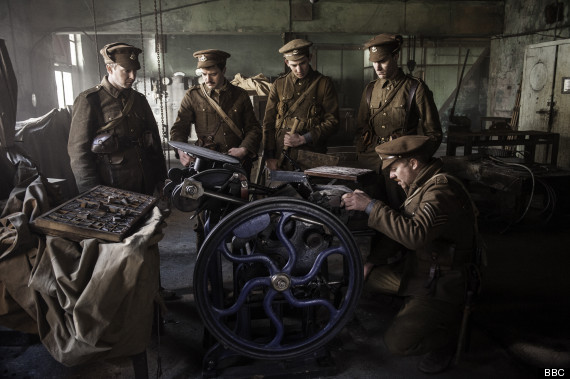
It is 1916 and British Captain Fred Roberts (Ben Chaplin, The Thin Red Line) and his detachment discover an abandoned printing press in the ruins of Ypres, Belgium. Roberts has an idea – he will produce a newspaper to raise the spirits of his soldiers. They call it The Wipers Times – after the army slang for Ypres – and fill it with spoofs, jokes, and subversive comedy.
Film Inspiration
The Wipers Times was a trench magazine that was published by British soldiers fighting in the Ypres Salient during the First World War.
In early 1916, the 12th Battalion, Sherwood Foresters, was stationed in the front line at Ypres, Belgium, and came across a printing press abandoned by a Belgian who had, in the words of the editor, “stood not on the order of his going, but gone.” A sergeant who had been a printer in peacetime salvaged it and printed a sample page. The paper itself was named after Tommy slang pronunciation of Ypres.
Under its initial title The Wipers Times and Salient News, the first issue was published on February 6, 1916, with a circulation of one hundred copies. It was followed by another 22 issues, mostly consisting of 12 pages each.
While the size and the layout of the magazine remained consistent, its main title changed many times. Previous titles remained listed in the subtitle in chronological order, for instance: The B.E.F. Times: with which are incorporated The Wipers Times, The “New Church” Times, The Kemmel Times & The Somme-Times. Every main title change initiates a new volume and issue sequence and as result, there are several instances of ‘volume 1, number 1’.
Publication was held up after February 1918 by the German offensive on the western front in that year, but at the end of the War, two issues were published as The Better Times. The second of these was billed as the Xmas, Peace and Final Number.
The names of the staff involved in the paper are mostly unrecorded. The editor was Captain (later Lieutenant Colonel) F. J. Roberts (Frederick John Roberts), MC, the sub-editor was Lieutenant (later Lieutenant Colonel) J. H. Pearson (John Hesketh (“Jack”) Pearson), DSO, MC. A notable contributor to the paper was Artilleryman Gilbert Frankau. Also worthy of note are the engravings by E.J. Couzens; his portrait of a chinless platoon commander clutching his cane and wondering “Am I as offensive as I might be?” became the paper’s motif.
Most other contributors from the Division used pseudonyms: some now obscure; some intended to satirise contemporary newspaper pundits such as William Beach Thomas (of the Daily Mail) and Hilaire Belloc; and some ironic, such as P.B.I. (Poor Bloody Infantry).
Production & Filming Details
- Director: Andy De Emmony.
- Producers: Cleone Clarke, Martin Davidson, Tim Dennison, Ivan MacTaggart, and David Parfitt.
- Writers: Ian Hislop and Nick Newman.
- Music: Nick Green.
- Cinematography: Mark Garrett.
- Editor: Stephen O’Connell.
- Production: Trademark Films, European Regional Development Fund, and Northern Ireland Screen.
- Distributor: BBC Television, BBC Two, and Polyband.
- Release Date: 11 September 2013 (UK).
- Running Time: 92 minutes.
- Country: UK.
- Language: English.
YouTube Link

 Military Gogglebox
Leave a comment