
Introduction
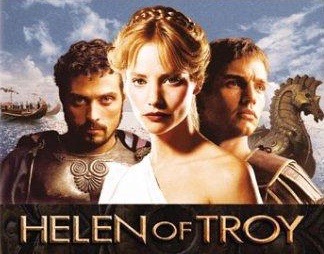
Helen of Troy is a 2003 British-American television miniseries based upon Homer’s story of the Trojan War, as recounted in the epic poem, Iliad.
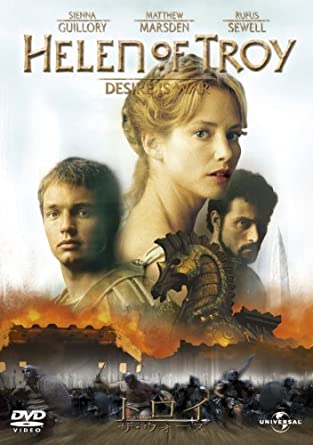
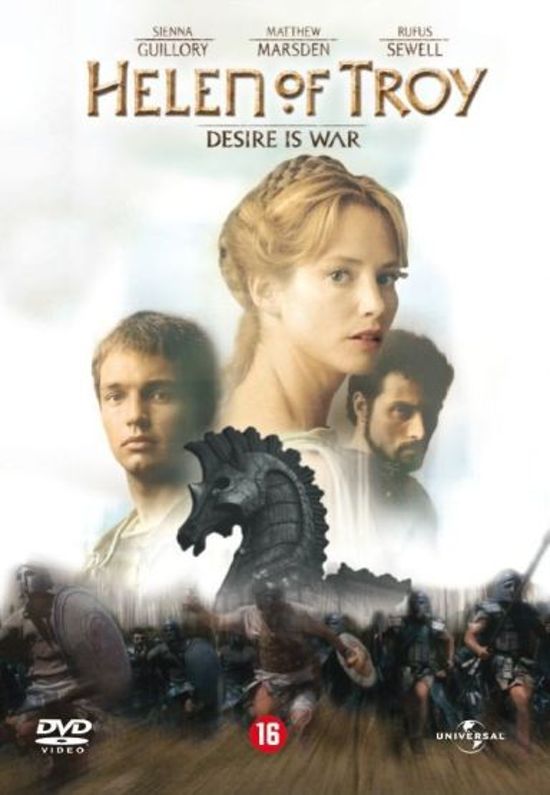
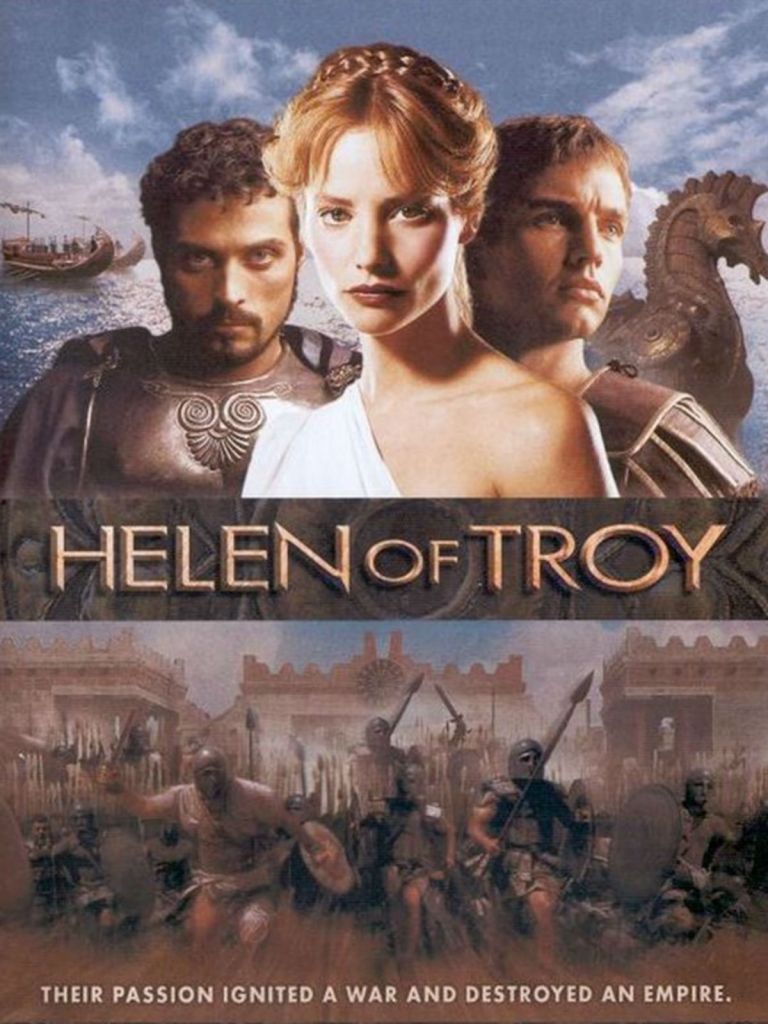
This TV miniseries also shares the name with a 1956 movie starring Stanley Baker.
It stars Sienna Guillory as Helen, Matthew Marsden as Paris, Rufus Sewell as Agamemnon, James Callis as Menelaus, John Rhys-Davies as Priam, Maryam d’Abo as Hecuba, as well as Stellan Skarsgård as Theseus.
Outline
Ten years pass. Agamemnon agrees to end the war with a single combat, between Menelaus and Paris. If Menelaus wins, Helen will be returned. If Menelaus loses, the Trojans may keep her. Whatever the outcome, the Greeks have to leave Troy.
Agamemnon cheats, poisoning Menelaus’ javelin without telling him. During the duel Paris is cut and the poison disorients him. Menelaus, however, does not take advantage of him; instead, they stop fighting and make peace between each other as a fog obscures them from view.
As the fog lifts, Agamemnon’s cheating is exposed. Hector challenges Agamemnon to a duel that will end the war – this time, to the death. Achilles takes up the challenge, fighting for Agamemnon, but agrees to fight not for Helen but for his own honour. Achilles easily succeeds in killing Hector.
That night Helen, fearing for Paris’s safety, goes to the seer Cassandra and asks to know what she can do to protect Paris. Cassandra replies that her only choice is to give herself to the Greeks. Helen agrees, presenting herself in Agamemnon’s tent and offering a trade – her for the body of Hector. Agamemnon refuses, as he does not want his daughter’s death to be in vain, as well as chases her around the camp, but Paris arrives in time to save her, challenging Agamemnon for the safety of Troy. Achilles charges at him, but Paris seizes a bow and shoots Achilles in the heel, killing him. Afterwards the Greeks attack him, but he is saved by Trojan soldiers and is reunited with Helen. Shortly thereafter, Agamemnon finds and stabs Paris. He dies in Helen’s arms.
During Paris’ funeral, the Greeks are reported to have sailed away – leaving a Trojan Horse, a massive wooden horse, on the shore. It is taken into the city and Troy celebrates late into the night. Unbeknownst to them though, there are some Greek soldiers inside the wooden horse. When they are all asleep, the Greeks come out and sack the city, slaying Priam and Hecuba. The great Agamemnon seats himself proudly on Troy’s throne as the new emperor of the Aegean and ruler of the World. Agamemnon has his men bring Helen to his throne. Agamemnon strokes Helen’s hair, restrains her and then begins to rape her. Menelaus tries to stop him, but is held back by Agamemnon’s guards. Odysseus is also shocked at Agamemnon’s act, but can do nothing.
The next morning, as the Greek soldiers ravage the ruins of Troy of its riches and take its people as slaves, Clytemnestra arrives in the royal palace of Troy, where she ventures into the royal pool. There, she finds Agamemnon and Helen, both naked. Agamemnon relaxes in triumph, while Helen sits near the pool, not saying a word. Clytemnestra covers her sister with a robe and sends her away, leaving her alone with Agamemnon. She tells him she comes for their daughter, Iphigenia. Agamemnon replies that she is not here. Clytemnestra replies “I know” then attacks, throwing her net-like shawl over her husband and stabs him repeatedly to death in the pool.
Helen wanders woefully through the ruined city, halting at the spot where Paris was slain. There, she sees an apparition of Paris and they embrace. Helen begs Paris to take her with him to the afterlife and he tells her that he has prepared a place for her, but she must wait until it is her time. He disappears and Menelaus arrives and draws his sword out. Helen prepares for her punishment, but Menelaus put his sword back and can do nothing but feel sorry for her. Helen tells him she cannot love him, but she “will follow”. The two head back to the Greek ships, ready to live the rest of their lives as king and queen of Sparta, leaving Troy, a kingdom that was once the richest of all, in ruins.
Trivia
- The series was entirely shot on location in the islands of Malta.
- The film is placed in the early classical period rather than the correct late Bronze Age: the Greeks are shown with Iron Age classical hoplite dress and arms.
- Made on a relatively low budget, Helen of Troy was released at a time when interest in the subject was high due to the soon-to-be-released Troy (2004).
Production & Filming Details
- Director(s): John Ken Harrison.
- Producer(s): Ted Kurdyla.
- Writer(s): Ronni Kern.
- Music: Joel Goldsmith.
- Cinematography: Edward J. Pai.
- Editor(s): Michael D. Ornstein.
- Production: Kurdyla Entertainment, Fuel Entertainment, and USA Cable Entertainment.
- Distributor(s): Universal Home Entertainment.
- Release Date: 20 April 2003.
- Running Time: 177 minutes (total running time).
- Country: UK and US.
- Language: English.


 Military Gogglebox
Leave a comment