

Introduction
The World at War is a 26-episode British television documentary series chronicling the events of the Second World War.
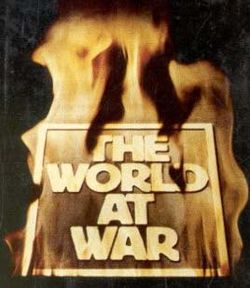
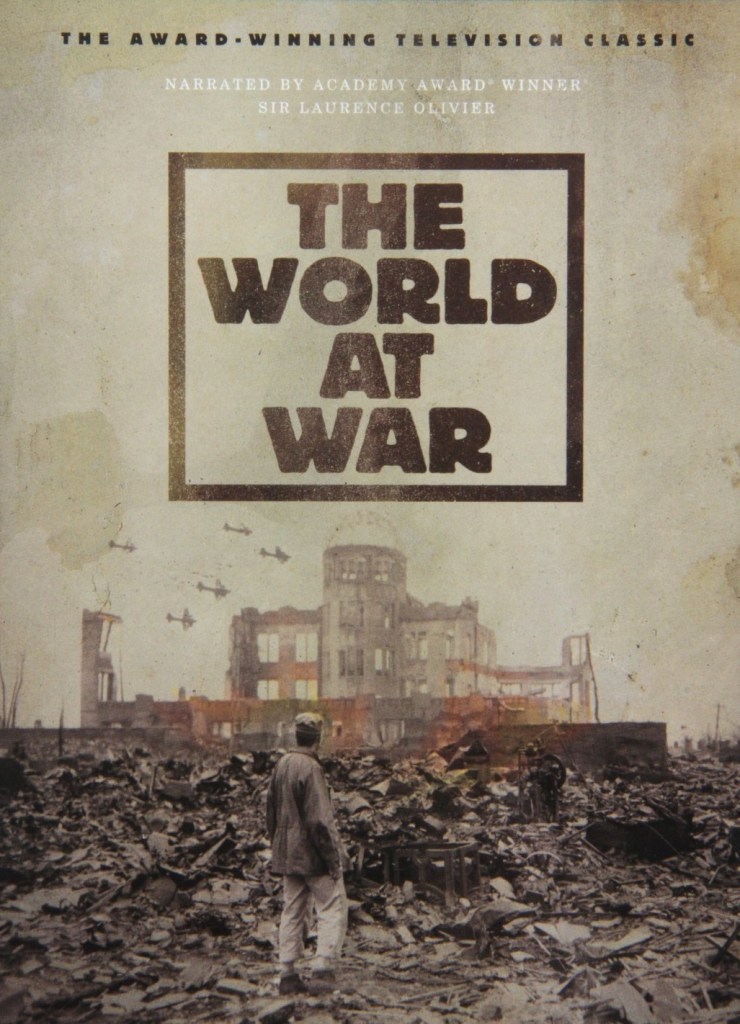
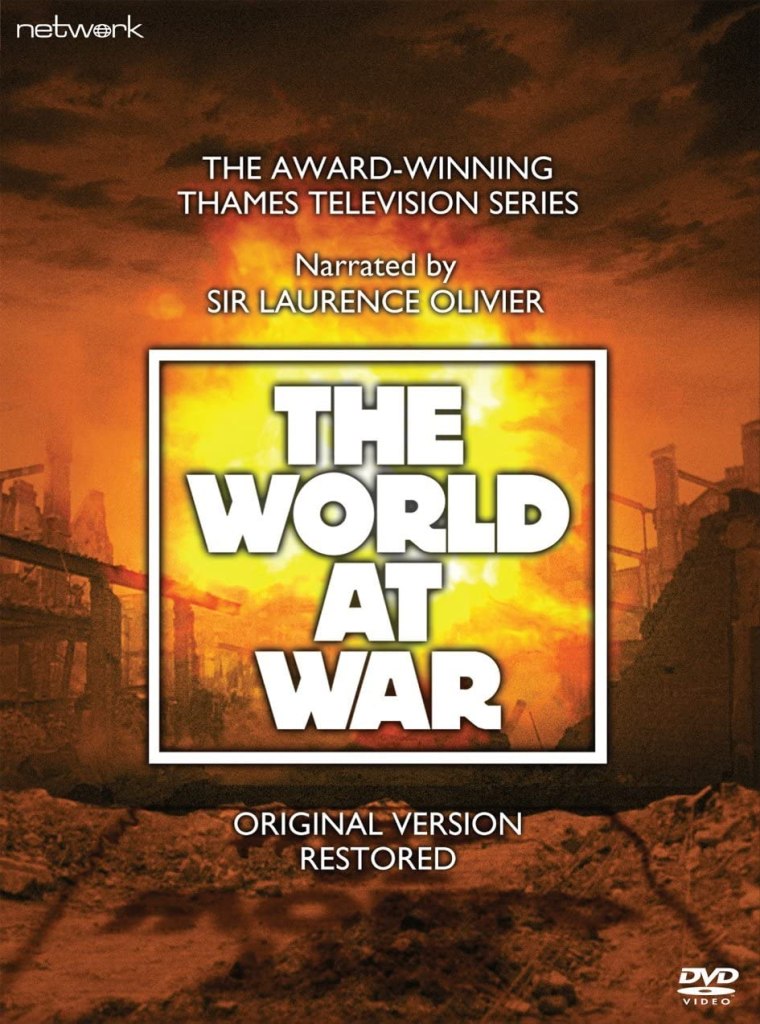
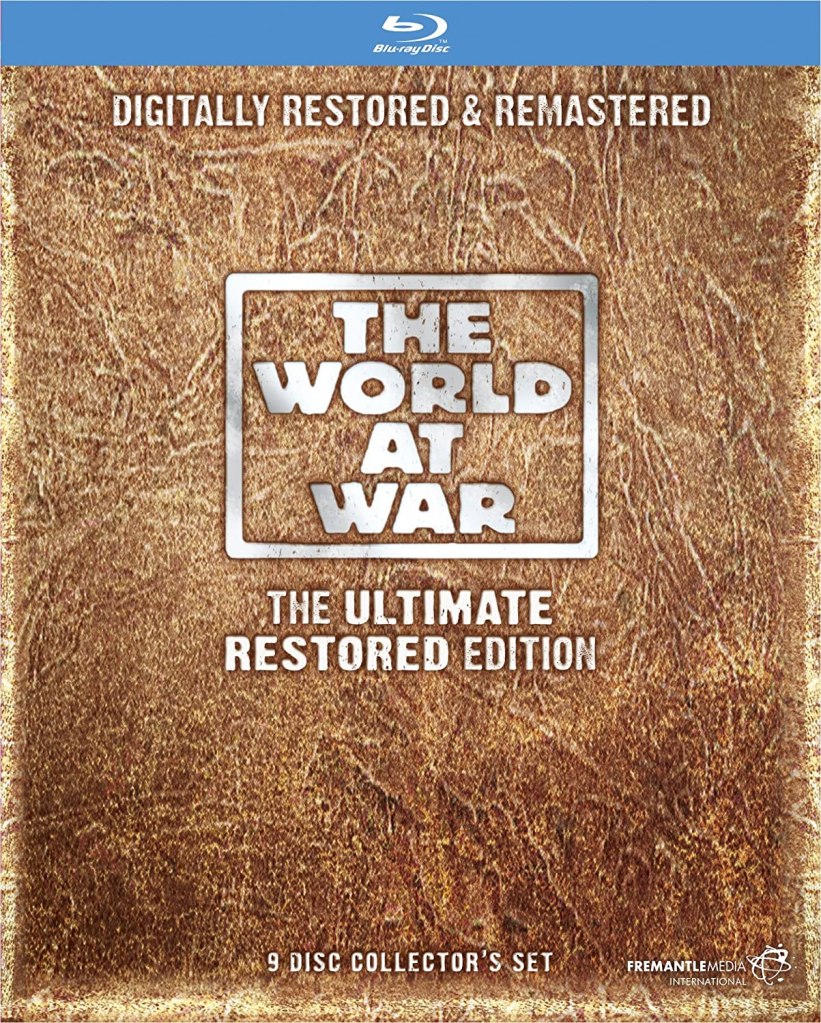
It was at the time of its completion in 1973, at a cost of £900,000 (equivalent to £11,000,000 in 2019), the most expensive factual series ever made.
It was produced by Jeremy Isaacs, narrated by Laurence Olivier and included music composed by Carl Davis.
The book, The World at War, published the same year, was written by Mark Arnold-Forster to accompany the TV series.
The World at War attracted widespread acclaim and is now regarded as a landmark in British television history.
Among many other aspects, the series focused on a portrayal of the experience of the conflict: of how life and death throughout the war years affected soldiers, sailors and airmen, civilians, concentration camp inmates and other victims of the war.
A making of documentary was aired in 1989.
Outline
Jeremy Isaacs had been inspired to look at the production of a long form documentary series about the Second World War following the BBC’s broadcast of its series The Great War in 1964.
The series featured interviews with major members of the Allied and Axis campaigns, including eyewitness accounts from civilians, enlisted men, officers and politicians.
Among these were Sir Max Aitken, Mark Clark, Jock Colville, Karl Dönitz, James “Jimmy” Doolittle, Lawrence Durrell, Lord Eden of Avon, Mitsuo Fuchida, Adolf Galland, Minoru Genda, W. Averell Harriman, Sir Arthur Harris, Alger Hiss, Brian Horrocks, Traudl Junge, Toshikazu Kase, Curtis LeMay, Hasso von Manteuffel, Bill Mauldin, John J. McCloy, Lord Mountbatten of Burma, J. B. Priestley, Albert Speer, James Stewart, Charles Sweeney, Paul Tibbets, Walter Warlimont, and historian Stephen Ambrose.
Trivia
- In the programme The Making of “The World at War” (1989), included in the DVD set, Jeremy Isaacs explains that priority was given to interviews with surviving aides and assistants rather than recognised figures.
- The most difficult person to locate and persuade to be interviewed was Heinrich Himmler’s adjutant Karl Wolff.
- During the interview he admitted to witnessing a large-scale execution in Himmler’s presence.
- Isaacs later expressed satisfaction with the content of the series, noting that if it had been unclassified knowledge at the time of production, he would have added references to British codebreaking efforts.
- Some footage and interviews which were not used in the original series were later made into additional hour or half-hour documentaries narrated by Eric Porter.
- These were released as a bonus to the VHS version and are included in the DVD set of the series, first released in 2001.
- The Making of the Series: The World at War (1989).
- Secretary to Hitler – Traudl Junge.
- From War to Peace – Professor Stephen Ambrose.
- Warrior – Reflections of Men at War.
- Hitler’s Germany: The People’s Community (1933–1939).
- Hitler’s Germany: Total War (1939–1945).
- The Two Deaths of Adolf Hitler.
- The Final Solution: Part One.
- The Final Solution: Part Two.
- Making of the Series – A 30th Anniversary Retrospective.
- Experiences of War.
- Restoring the World at War.
- The original book The World at War, which accompanied the series, was written by Mark Arnold-Forster in 1973.
- In October 2007, Ebury Press published The World at War, a new book by Richard Holmes, an oral history of the Second World War drawn from the interviews conducted for the TV series.
- The programme’s producers shot hundreds of hours of interviews, but only a fraction of that recorded material was used for the final version of the series.
- A selection of the rest of this material was published in this book, which included interviews with Albert Speer, Karl Wolff (Himmler’s adjutant), Traudl Junge (Hitler’s secretary), James Stewart (USAAF bomber pilot and Hollywood star), Anthony Eden, John Colville (Private Secretary to Winston Churchill), Averell Harriman (US Ambassador to the Soviet Union) and Arthur “Bomber” Harris (Head of RAF Bomber Command).
The World at War Series
- Episode 01: A New Germany (1933-1939).
- Episode 02: Distant War (September 1939 – May 1940).
- Episode 03: France Falls (May-June 1940).
- Episode 04: Alone (May 1940 – May 1941).
- Episode 05: Barbarossa (June-December 1941).
- Episode 06: Banzai!: Japan (1931-1942).
- Episode 07: On Our Way: U.S.A. (1939-1942).
- Episode 08: The Desert: North Africa (1940-1943).
- Episode 09: Stalingrad (June 1942 – February 1943).
- Episode 10: Wolf Pack: U-Boats in the Atlantic (1939-1944).
- Episode 11: Red Star: The Soviet Union (1941-1943).
- Episode 12: Whirlwind: Bombing Germany (September 1939 – April 1944).
- Episode 13: Tough Old Gut: Italy (November 1942 – June 1944).
- Episode 14: It’s a Lovely Day Tomorrow: Burma (1942-1944).
- Episode 15: Home Fires: Britain (1940-1944).
- Episode 16: Inside the Reich: Germany (1940-1944).
- Episode 17: Morning (June-August 1944).
- Episode 18: Occupation: Holland (1940-1944).
- Episode 19: Pincers (August 1944 – March 1945).
- Episode 20: Genocide (1941-1945).
- Episode 21: Nemesis: Germany (February-May 1945).
- Episode 22: Japan (1941-1945).
- Episode 23: Pacific (February 1942 – July 1945).
- Episode 24: The Bomb (February-September 1945).
- Episode 25: Reckoning (April 1945).
- Episode 26: Remember.
Production & Filming Details
- Creator(s): Jeremy Isaacs.
- Narrator(s): Lawrence Olivier.
- Director(s): Hugh Raggett (3 episodes, 1973-1974), John Pett (3 episodes, 1974), David Elstein (2 episodes, 1973), Ted Childs (2 episodes, 1974), Michael Darlow (2 episodes, 1974), and Martin Smith (2 episodes, 1974).
- Producer(s): Jeremy Isaacs, Peter Batty, David Elstein, John Pett, Jerome Kuehl, Ted Childs, Michael Darlow, Martin Smith, Phillip Whitehead, Nigel Bell, Roger Chinery, Rene Go, Andrew Hassam, Clive Hedges, Jenny Holt, Joanna Lack, Antonio Marques, David Marsh, Tony Message, Hugh Raggett, Michael Fox, Bob Harvey, Pip Martin, David Spence, Liz Sutherland, Sean Fullerton, and Ben Shepard.
- Writer(s): Neal Ascherson (3 episodes, 1973-1974), Peter Batty (6 episodes, 1973-1974), Charles Bloomberg (2 episodes, 1974), Courtney Browne (1 episode, 1974), Angus Calder (1 episode, 1974), Charles Douglas-Home (1 episode, 1974), David Elstein (1 episode, 1974), Anne Frank (uncredited) (1 episode, 1974), Stuart Hood (1 episode, 1974), Jeremy Isaacs (1 episode, 1974), Jerome Kuehl (2 episodes, 1974), J.P.W. Mallalieu (1 episode, 1974), Laurence Thompson (2 episodes, 1973), David Wheeler (2 episodes, 1974), and John Williams (2 episodes, 1974).
- Music: Carl Davis.
- Editor(s): Beryl Wilkins, Jeff Harvey, Peter Lee-Thompson, Alan Afriat, David Taylor, and Martin Smith.
- Production: Thames Television and Imperial War Museum (in cooperation with).
- Distributor(s): ITV (1973-1974), Danmarks Radio (DR) (1976-1977, 2004, and 2006), BBC (2001), Nordisk Film (2006), and Yesterday Channel (2018).
- Release Date: 31 October 1973 to 08 May 1974.
- Running Time: 52 minutes (per episode).
- Country: UK.
- Language: English.


 Military Gogglebox
Leave a comment