
Introduction
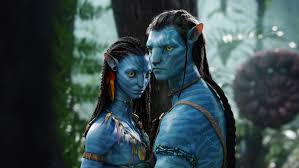
Avatar (marketed as James Cameron’s Avatar) is a 2009 American epic science fiction film directed, written, produced, and co-edited by James Cameron and stars Sam Worthington, Zoe Saldana, Stephen Lang, Michelle Rodriguez, and Sigourney Weaver.
The film is set in the mid-22nd century when humans are colonising Pandora, a lush habitable moon of a gas giant in the Alpha Centauri star system, in order to mine the mineral unobtanium, a room-temperature superconductor. The expansion of the mining colony threatens the continued existence of a local tribe of Na’vi – a humanoid species indigenous to Pandora.
The film’s title refers to a genetically engineered Na’vi body operated from the brain of a remotely located human that is used to interact with the natives of Pandora.
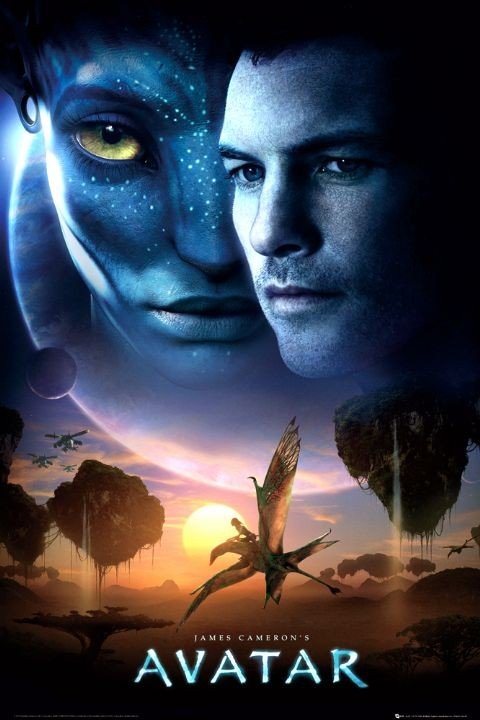
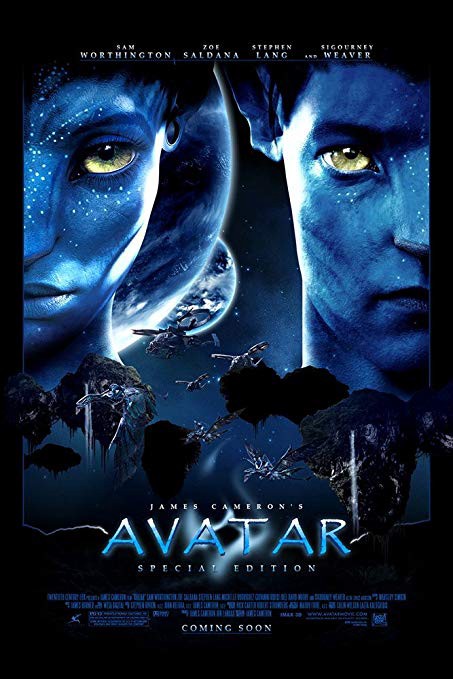
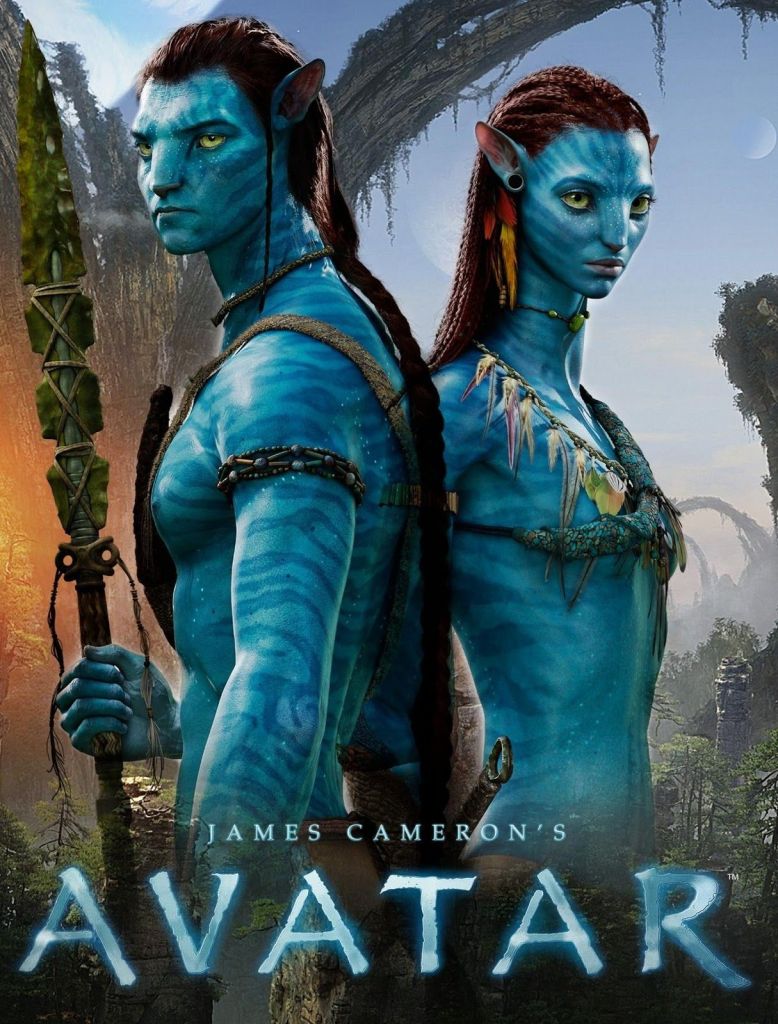
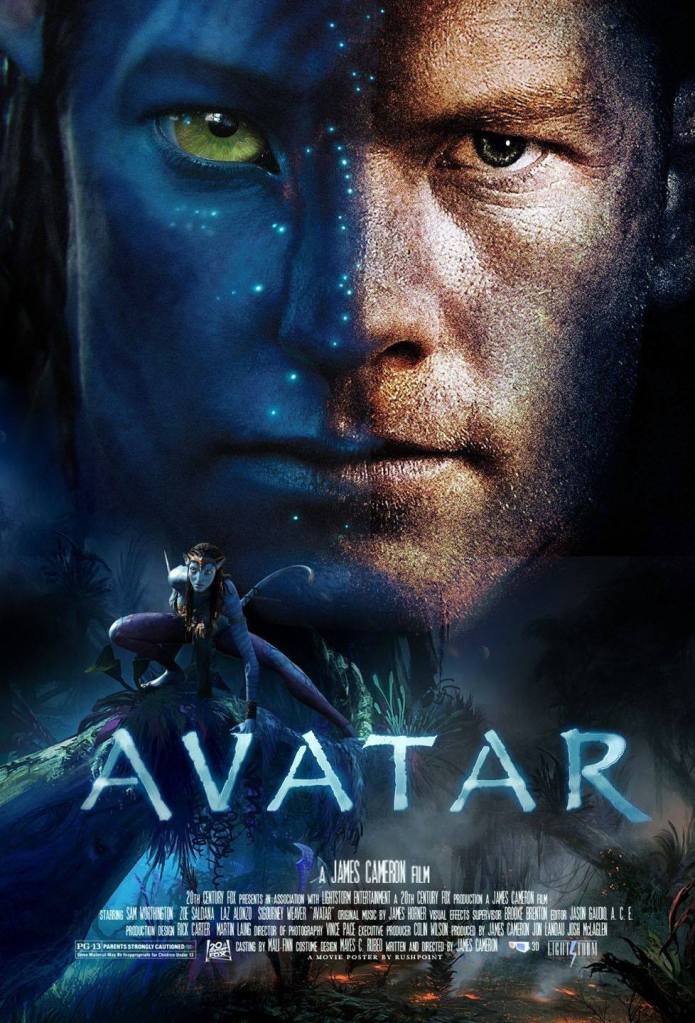
Following the film’s success, Cameron signed with 20th Century Fox to produce four sequels: Avatar 02 and Avatar 03 have completed principal filming, and are scheduled to be released on 16 December 2022 and 20 December 2024, respectively; subsequent sequels are scheduled to be released on 18 December 2026 and 22 December 2028. Several cast members are expected to return, including Worthington, Saldana, Lang, and Weaver.
Outline
In 2154, humans have depleted Earth’s natural resources, leading to a severe energy crisis. The Resources Development Administration (RDA) mines a valuable mineral unobtanium on Pandora, a densely forested habitable moon orbiting Polyphemus, a fictional gas giant in the Alpha Centauri star system. Pandora, whose atmosphere is poisonous to humans, is inhabited by the Na’vi, a species of 10-foot tall (3.0 m), blue-skinned, sapient humanoids that live in harmony with nature and worship a mother goddess named Eywa.
To explore Pandora’s biosphere, scientists use Na’vi-human hybrids called “avatars”, operated by genetically matched humans. Jake Sully, a paraplegic former Marine, replaces his deceased identical twin brother as an operator of one. Dr. Grace Augustine, head of the Avatar Programme, considers Sully an inadequate replacement but accepts his assignment as a bodyguard. While escorting the avatars of Grace and fellow scientist Dr. Norm Spellman, Jake’s avatar is attacked by a thanator and flees into the forest, where he is rescued by Neytiri, a female Na’vi. Witnessing an auspicious sign, she takes him to her clan. Neytiri’s mother Mo’at, the clan’s spiritual leader, orders her daughter to initiate Jake into their society.
Colonel Miles Quaritch, head of RDA’s private security force, promises Jake that the company will restore his legs if he gathers information about the Na’vi and the clan’s gathering place, a giant tree called Hometree, which stands above the richest deposit of unobtanium in the area. When Grace learns of this, she transfers herself, Jake, and Norm to an outpost. Over the following three months, Jake and Neytiri fall in love as Jake grows to sympathise with the natives. After Jake is initiated into the tribe, he and Neytiri choose each other as mates. Soon afterward, Jake reveals his change of allegiance when he attempts to disable a bulldozer that threatens to destroy a sacred Na’vi site. When Quaritch shows a video recording of Jake’s attack on the bulldozer to Administrator Parker Selfridge, and another in which Jake admits that the Na’vi will never abandon Hometree, Selfridge orders Hometree destroyed.
Despite Grace’s argument that destroying Hometree could damage the biological neural network native to Pandora, Selfridge gives Jake and Grace one hour to convince the Na’vi to evacuate before commencing the attack. Jake confesses to the Na’vi that he was a spy, and they take him and Grace captive. Quaritch’s men destroy Hometree, killing Neytiri’s father (the clan chief) and many others. Mo’at frees Jake and Grace, but they are detached from their avatars and imprisoned by Quaritch’s forces. Pilot Trudy Chacón, disgusted by Quaritch’s brutality, frees Jake, Grace, and Norm, and airlifts them to Grace’s outpost, but Grace is shot by Quaritch during the escape.
To regain the Na’vi’s trust, Jake connects his mind to that of Toruk, a dragon-like predator feared and honoured by the Na’vi. Jake finds the refugees at the sacred Tree of Souls and pleads with Mo’at to heal Grace. The clan attempts to transfer Grace from her human body into her avatar with the aid of the Tree of Souls, but she dies before the process can be completed. Supported by the new chief Tsu’tey, Jake unites the clan and tells them to gather all of the clans to battle the RDA. Quaritch organiess a pre-emptive strike against the Tree of Souls, believing that its destruction will demoralise the natives. On the eve of battle, Jake prays to Eywa, via a neural connection with the Tree of Souls, to intercede on behalf of the Na’vi.
During the subsequent battle, the Na’vi suffer heavy casualties, including Tsu’tey and Trudy, but are rescued when Pandoran wildlife unexpectedly join the attack and overwhelm the humans, which Neytiri interprets as Eywa’s answer to Jake’s prayer. Jake destroys a makeshift bomber before it can reach the Tree of Souls; Quaritch, wearing an AMP suit, escapes from his own damaged aircraft and breaks open the avatar link unit containing Jake’s human body, exposing it to Pandora’s poisonous atmosphere. Quaritch prepares to slit the throat of Jake’s avatar, but Neytiri kills Quaritch and saves Jake from suffocation, seeing his human form for the first time.
With the exceptions of Jake, Norm and a select few others, all humans are expelled from Pandora and sent back to Earth. Jake is permanently transferred into his avatar with the aid of the Tree of Souls.
Cast
Humans
- Sam Worthington as Jake Sully:
- A disabled former Marine who becomes part of the Avatar Programme after his twin brother is killed.
- His military background helps the Na’vi warriors relate to him.
- Cameron cast the Australian actor after a worldwide search for promising young actors, preferring relative unknowns to keep the budget down.
- Worthington, who was living in his car at the time, auditioned twice early in development, and he has signed on for possible sequels.
- Cameron felt that because Worthington had not done a major film, he would give the character “a quality that is really real”. Cameron said he “has that quality of being a guy you’d want to have a beer with, and he ultimately becomes a leader who transforms the world”.
- Sam Worthington also plays Jake’s deceased twin brother, Tommy.
- Stephen Lang as Colonel Miles Quaritch:
- The head of the mining operation’s security detail.
- Fiercely consistent in his disregard for any life not recognised as human, he has a profound disregard for Pandora’s inhabitants that is evident in both his actions and his language.
- Lang had unsuccessfully auditioned for a role in Cameron’s Aliens (1986), but the director remembered Lang and sought him for Avatar.
- Michael Biehn, who had worked with Cameron in Aliens, The Terminator and Terminator 02: Judgement Day, was briefly considered for the role.
- He read the script and watched some of the 3-D footage with Cameron but was ultimately not cast.
- Sigourney Weaver as Dr. Grace Augustine:
- An exobiologist and head of the Avatar Programme.
- She is also Sully’s mentor and an advocate of peaceful relations with the Na’vi, having set up a school to teach them English.
- Michelle Rodriguez as Trudy Chacón:
- A combat pilot assigned to support the Avatar Programme who is sympathetic to the Na’vi. Cameron had wanted to work with Rodriguez since seeing her in Girlfight.
- Giovanni Ribisi as Parker Selfridge:
- The corporate administrator for the RDA mining operation.
- While he is at first willing to destroy the Na’vi civilisation to preserve the company’s bottom line, he is reluctant to authorise the attacks on the Na’vi and taint his image, doing so only after Quaritch persuades him that it is necessary and that the attacks will be humane.
- When the attacks are broadcast to the base, Selfridge displays discomfort at the violence.
- Joel David Moore as Dr. Norm Spellman:
- A xenoanthropologist who studies plant and animal life as part of the Avatar Programme.
- He arrives on Pandora at the same time as Sully and operates an avatar.
- Although he is expected to lead the diplomatic contact with the Na’vi, it turns out that Jake has the personality better suited to win the natives’ respect.
- Dileep Rao as Dr. Max Patel:
- A scientist who works in the Avatar Programme and comes to support Jake’s rebellion against the RDA.
Na’vi
- Zoe Saldana as Neytiri:
- The daughter of the leader of the Omaticaya (the Na’vi clan central to the story).
- She is attracted to Jake because of his bravery, though frustrated with him for what she sees as his naiveté and stupidity.
- She serves as Jake’s love interest.
- The character, like all the Na’vi, was created using performance capture, and its visual aspect is entirely computer generated.
- Saldana has also signed on for potential sequels.
- CCH Pounder as Mo’at:
- The Omaticaya’s spiritual leader, Neytiri’s mother, and consort to clan leader Eytukan.
- Wes Studi as Eytukan:
- The Omaticaya’s clan leader, Neytiri’s father, and Mo’at’s mate.
- Laz Alonso as Tsu’tey:
- The finest warrior of the Omaticaya.
- He is heir to the chieftainship of the tribe.
- At the beginning of the film’s story, he is betrothed to Neytiri.
Production
Origins
In 1994, director James Cameron wrote an 80-page treatment for Avatar, drawing inspiration from “every single science fiction book” he had read in his childhood as well as from adventure novels by Edgar Rice Burroughs and H. Rider Haggard. In August 1996, Cameron announced that after completing Titanic, he would film Avatar, which would make use of synthetic, or computer-generated, actors. The project would cost $100 million and involve at least six actors in leading roles “who appear to be real but do not exist in the physical world”. Visual effects house Digital Domain, with whom Cameron has a partnership, joined the project, which was supposed to begin production in mid-1997 for a 1999 release. However, Cameron felt that the technology had not caught up with the story and vision that he intended to tell. He decided to concentrate on making documentaries and refining the technology for the next few years. It was revealed in a Bloomberg BusinessWeek cover story that 20th Century Fox had fronted $10 million to Cameron to film a proof-of-concept clip for Avatar, which he showed to Fox executives in October 2005.
In February 2006, Cameron revealed that his film Project 880 was “a retooled version of Avatar”, a film that he had tried to make years earlier, citing the technological advances in the creation of the computer-generated characters Gollum, King Kong, and Davy Jones. Cameron had chosen Avatar over his project Battle Angel after completing a five-day camera test in the previous year.
Development
From January to April 2006, Cameron worked on the script and developed a culture for the film’s aliens, the Na’vi. Their language was created by Dr. Paul Frommer, a linguist at USC. The Na’vi language has a lexicon of about 1000 words, with some 30 added by Cameron. The tongue’s phonemes include ejective consonants (such as the “kx” in “skxawng”) that are found in the Amharic language of Ethiopia, and the initial “ng” that Cameron may have taken from New Zealand Māori. Actress Sigourney Weaver and the film’s set designers met with Jodie S. Holt, professor of plant physiology at University of California, Riverside, to learn about the methods used by botanists to study and sample plants, and to discuss ways to explain the communication between Pandora’s organisms depicted in the film.
From 2005 to 2007, Cameron worked with a handful of designers, including famed fantasy illustrator Wayne Barlowe and renowned concept artist Jordu Schell, to shape the design of the Na’vi with paintings and physical sculptures when Cameron felt that 3-D brush renderings were not capturing his vision, often working together in the kitchen of Cameron’s Malibu home. In July 2006, Cameron announced that he would film Avatar for a mid-2008 release and planned to begin principal photography with an established cast by February 2007. The following August, the visual effects studio Weta Digital signed on to help Cameron produce Avatar. Stan Winston, who had collaborated with Cameron in the past, joined Avatar to help with the film’s designs. Production design for the film took several years. The film had two different production designers, and two separate art departments, one of which focused on the flora and fauna of Pandora, and another that created human machines and human factors. In September 2006, Cameron was announced to be using his own Reality Camera System to film in 3-D. The system would use two high-definition cameras in a single camera body to create depth perception.
While these preparations were underway, Fox kept wavering in its commitment to Avatar because of its painful experience with cost overruns and delays on Cameron’s previous picture, Titanic, even though Cameron rewrote the script to combine several characters together and offered to cut his fee in case the film flopped. Cameron installed a traffic light with the amber signal lit outside of co-producer Jon Landau’s office to represent the film’s uncertain future. In mid-2006, Fox told Cameron “in no uncertain terms that they were passing on this film,” so he began shopping it around to other studios and approached Walt Disney Studios, showing his proof of concept to then chairman Dick Cook. However, when Disney attempted to take over, Fox exercised its right of first refusal. In October 2006, Fox finally agreed to commit to making Avatar after Ingenious Media agreed to back the film, which reduced Fox’s financial exposure to less than half of the film’s official $237 million budget. After Fox accepted Avatar, one sceptical Fox executive shook his head and told Cameron and Landau, “I don’t know if we’re crazier for letting you do this, or if you’re crazier for thinking you can do this …”
In December 2006, Cameron described Avatar as “a futuristic tale set on a planet 200 years hence … an old-fashioned jungle adventure with an environmental conscience [that] aspires to a mythic level of storytelling”. The January 2007 press release described the film as “an emotional journey of redemption and revolution” and said the story is of “a wounded former Marine, thrust unwillingly into an effort to settle and exploit an exotic planet rich in biodiversity, who eventually crosses over to lead the indigenous race in a battle for survival”. The story would be of an entire world complete with an ecosystem of phantasmagorical plants and creatures, and native people with a rich culture and language.
Estimates put the cost of the film at about $280–310 million to produce and an estimated $150 million for marketing, noting that about $30 million in tax credits will lessen the financial impact on the studio and its financiers. A studio spokesperson said that the budget was “$237 million, with $150 million for promotion, end of story.”
Themes and Inspirations
Avatar is primarily an action-adventure journey of self-discovery, in the context of imperialism, and deep ecology. Cameron said his inspiration was “every single science fiction book I read as a kid” and that he was particularly striving to update the style of Edgar Rice Burroughs’s John Carter series and the deep jungles of Pandora were visualised from Disney’s 37th animated film, Tarzan. He acknowledged that Avatar shares themes with the films At Play in the Fields of the Lord, The Emerald Forest, and Princess Mononoke, which feature clashes between cultures and civilisations, and with Dances with Wolves, where a battered soldier finds himself drawn to the culture he was initially fighting against. He also cited Hayao Miyazaki’s anime films such as Princess Mononoke as an influence on the ecosystem of Pandora.
In a 2007 interview with Time magazine, Cameron was asked about the meaning of the term Avatar, to which he replied, “It’s an incarnation of one of the Hindu gods taking a flesh form. In this film what that means is that the human technology in the future is capable of injecting a human’s intelligence into a remotely located body, a biological body.” Cameron also cited the Japanese cyberpunk manga and anime Ghost in the Shell, in terms of how humans can remotely control, and transfer their personalities into, alien bodies.
The look of the Na’vi – the humanoids indigenous to Pandora – was inspired by a dream that Cameron’s mother had, long before he started work on Avatar. In her dream, she saw a blue-skinned woman 12 feet (4 m) tall, which he thought was “kind of a cool image”. Also he said, “I just like blue. It’s a good color … plus, there’s a connection to the Hindu deities, which I like conceptually.” He included similar creatures in his first screenplay (written in 1976 or 1977), which featured a planet with a native population of “gorgeous” tall blue aliens. The Na’vi were based on them.
For the love story between characters Jake and Neytiri, Cameron applied a star-crossed love theme, and acknowledged its similarity to the pairing of Jack and Rose from his film Titanic. An interviewer stated, “Both couples come from radically different cultures that are contemptuous of their relationship and are forced to choose sides between the competing communities.” Cameron felt that whether or not the Jake and Neytiri love story would be perceived as believable partially hinged on the physical attractiveness of Neytiri’s alien appearance, which was developed by considering her appeal to the all-male crew of artists. Although Cameron felt Jake and Neytiri do not fall in love right away, their portrayers (Worthington and Saldana) felt the characters did. Cameron said the two actors “had a great chemistry” during filming.
For the film’s floating “Hallelujah Mountains”, the designers drew inspiration from “many different types of mountains, but mainly the karst limestone formations in China.” According to production designer Dylan Cole, the fictional floating rocks were inspired by Huangshan (also known as Yellow Mountain), Guilin, Zhangjiajie, among others around the world. Cameron had noted the influence of the Chinese peaks on the design of the floating mountains.
To create the interiors of the human mining colony on Pandora, production designers visited the Noble Clyde Boudreaux oil platform in the Gulf of Mexico during June 2007. They photographed, measured and filmed every aspect of the platform, which was later replicated on-screen with photorealistic CGI during post-production.
Cameron said that he wanted to make “something that has this spoonful of sugar of all the action and the adventure and all that” but also have a conscience “that maybe in the enjoying of it makes you think a little bit about the way you interact with nature and your fellow man”. He added that “the Na’vi represent something that is our higher selves, or our aspirational selves, what we would like to think we are” and that even though there are good humans within the film, the humans “represent what we know to be the parts of ourselves that are trashing our world and maybe condemning ourselves to a grim future”.
Cameron acknowledges that Avatar implicitly criticises the United States’ role in the Iraq War and the impersonal nature of mechanised warfare in general. In reference to the use of the term shock and awe in the film, Cameron said, “We know what it feels like to launch the missiles. We don’t know what it feels like for them to land on our home soil, not in America.” He said in later interviews, “… I think it’s very patriotic to question a system that needs to be corralled …” and, “The film is definitely not anti-American.” A scene in the film portrays the violent destruction of the towering Na’vi Hometree, which collapses in flames after a missile attack, coating the landscape with ash and floating embers. Asked about the scene’s resemblance to the September 11 attacks on the World Trade Center, Cameron said he had been “surprised at how much it did look like September 11”.
Filming
Principal photography for Avatar began in April 2007 in Los Angeles and Wellington, New Zealand. Cameron described the film as a hybrid with a full live-action shoot in combination with computer-generated characters and live environments. “Ideally at the end of the day the audience has no idea which they’re looking at,” Cameron said. The director indicated that he had already worked four months on nonprincipal scenes for the film. The live action was shot with a modified version of the proprietary digital 3-D Fusion Camera System, developed by Cameron and Vince Pace. In January 2007, Fox had announced that 3-D filming for Avatar would be done at 24 frames per second despite Cameron’s strong opinion that a 3-D film requires higher frame rate to make strobing less noticeable. According to Cameron, the film is composed of 60% computer-generated elements and 40% live action, as well as traditional miniatures.
Motion-capture photography lasted 31 days at the Hughes Aircraft stage in Playa Vista in Los Angeles. Live action photography began in October 2007 at Stone Street Studios in Wellington, New Zealand, and was scheduled to last 31 days. More than a thousand people worked on the production. In preparation of the filming sequences, all of the actors underwent professional training specific to their characters such as archery, horseback riding, firearm use, and hand-to-hand combat. They received language and dialect training in the Na’vi language created for the film. Before shooting the film, Cameron also sent the cast to the Hawaiian tropical rainforests to get a feel for a rainforest setting before shooting on the soundstage.
During filming, Cameron made use of his virtual camera system, a new way of directing motion-capture filmmaking. The system shows the actors’ virtual counterparts in their digital surroundings in real time, allowing the director to adjust and direct scenes just as if shooting live action. According to Cameron, “It’s like a big, powerful game engine. If I want to fly through space, or change my perspective, I can. I can turn the whole scene into a living miniature and go through it on a 50 to 1 scale.” Using conventional techniques, the complete virtual world cannot be seen until the motion-capture of the actors is complete. Cameron said this process does not diminish the value or importance of acting. On the contrary, because there is no need for repeated camera and lighting setups, costume fittings and make-up touch-ups, scenes do not need to be interrupted repeatedly. Cameron described the system as a “form of pure creation where if you want to move a tree or a mountain or the sky or change the time of day, you have complete control over the elements”.
Cameron gave fellow directors Steven Spielberg and Peter Jackson a chance to test the new technology. Spielberg said, “I like to think of it as digital makeup, not augmented animation … Motion capture brings the director back to a kind of intimacy that actors and directors only know when they’re working in live theater.” Spielberg and George Lucas were also able to visit the set to watch Cameron direct with the equipment.
To film the shots where CGI interacts with live action, a unique camera referred to as a “simulcam” was used, a merger of the 3-D fusion camera and the virtual camera systems. While filming live action in real time with the simulcam, the CGI images captured with the virtual camera or designed from scratch, are superimposed over the live action images as in augmented reality and shown on a small monitor, making it possible for the director to instruct the actors how to relate to the virtual material in the scene.
Due to Cameron’s personal convictions about climate change, he allowed only plant-based (vegan) food to be served on set.
Visual Effects
A number of innovative visual effects techniques were used during production. According to Cameron, work on the film had been delayed since the 1990’s to allow the techniques to reach the necessary degree of advancement to adequately portray his vision of the film. The director planned to make use of photorealistic computer-generated characters, created using new motion capture animation technologies he had been developing in the 14 months leading up to December 2006.
Innovations include a new system for lighting massive areas like Pandora’s jungle, a motion-capture stage or “volume” six times larger than any previously used, and an improved method of capturing facial expressions, enabling full performance capture. To achieve the face capturing, actors wore individually made skull caps fitted with a tiny camera positioned in front of the actors’ faces; the information collected about their facial expressions and eyes is then transmitted to computers. According to Cameron, the method allows the filmmakers to transfer 100% of the actors’ physical performances to their digital counterparts. Besides the performance capture data which were transferred directly to the computers, numerous reference cameras gave the digital artists multiple angles of each performance. A technically challenging scene was near the end of the film when the computer-generated Neytiri held the live action Jake in human form, and attention was given to the details of the shadows and reflected light between them.
The lead visual effects company was Weta Digital in Wellington, New Zealand, at one point employing 900 people to work on the film. Because of the huge amount of data which needed to be stored, cataloged and available for everybody involved, even on the other side of the world, a new cloud computing and Digital Asset Management (DAM) system named Gaia was created by Microsoft especially for Avatar, which allowed the crews to keep track of and coordinate all stages in the digital processing. To render Avatar, Weta used a 930 m2 (10,000 sq ft) server farm making use of 4,000 Hewlett-Packard servers with 35,000 processor cores with 104 terabytes of RAM and three petabytes of network area storage running Ubuntu Linux, Grid Engine cluster manager, and 2 of the animation software and managers, Pixar’s RenderMan and Pixar’s Alfred queue management system. The render farm occupies the 193rd to 197th spots in the TOP500 list of the world’s most powerful supercomputers. A new texturing and paint software system, called Mari, was developed by The Foundry in cooperation with Weta. Creating the Na’vi characters and the virtual world of Pandora required over a petabyte of digital storage, and each minute of the final footage for Avatar occupies 17.28 gigabytes of storage. It would often take the computer several hours to render a single frame of the film. To help finish preparing the special effects sequences on time, a number of other companies were brought on board, including Industrial Light & Magic, which worked alongside Weta Digital to create the battle sequences. ILM was responsible for the visual effects for many of the film’s specialised vehicles and devised a new way to make CGI explosions. Joe Letteri was the film’s visual effects general supervisor.
Music
Composer James Horner scored the film, his third collaboration with Cameron after Aliens and Titanic. Horner recorded parts of the score with a small chorus singing in the alien language Na’vi in March 2008. He also worked with Wanda Bryant, an ethnomusicologist, to create a music culture for the alien race. The first scoring sessions were planned to take place in early 2009. During production, Horner promised Cameron that he would not work on any other project except for Avatar and reportedly worked on the score from four in the morning until ten at night throughout the process. He stated in an interview, “Avatar has been the most difficult film I have worked on and the biggest job I have undertaken.” Horner composed the score as two different scores merged into one. He first created a score that reflected the Na’vi way of sound and then combined it with a separate “traditional” score to drive the film. British singer Leona Lewis was chosen to sing the theme song for the film, called “I See You”. An accompanying music video, directed by Jake Nava, premiered 15 December 2009, on MySpace.
Release
Initial Screening
Avatar premiered in London on 10 December 2009, and was released theatrically worldwide from 16-18 December. The film was originally set for release on 22 May 2009, during filming, but was pushed back to allow more post-production time (the last shots were delivered in November), and to give more time for theatres worldwide to install 3D projectors. Cameron stated that the film’s aspect ratio would be 1.78:1 for 3D screenings and that a 2.39:1 image would be extracted for 2D screenings. However, a 3D 2.39:1 extract was approved for use with constant-image-height screens (i.e. screens which increase in width to display 2.39:1 films).[163] During a 3D preview showing in Germany on 16 December the movie’s DRM ‘protection’ system failed, and some copies delivered could not be watched at all in the theatres. The problems were fixed in time for the public premiere. Avatar was released in a total of 3,457 theatres in the US, of which 2,032 theatres ran it in 3D. In total 90% of all advance ticket sales for Avatar were for 3D screenings.
Internationally, Avatar opened on a total of 14,604 screens in 106 territories, of which 3,671 were showing the film in 3D (producing 56% of the first weekend gross). The film was simultaneously presented in IMAX 3D format, opening in 178 theatres in the US on 18 December. The international IMAX release included 58 theatres beginning on 16 December, and 25 more theatres were to be added in the coming weeks. The IMAX release was the company’s widest to date, a total of 261 theatres worldwide. The previous IMAX record opening was Harry Potter and the Half-Blood Prince, which opened in 161 IMAX theatres in the US, and about 70 international. 20th Century Fox Korea adapted and later released Avatar in 4D version, which included “moving seats, smells of explosives, sprinkling water, laser lights and wind”.
Box Office
Avatar was released internationally on more than 14,000 screens. It earned $3,537,000 from midnight screenings domestically (US and Canada), with the initial 3D release limited to 2,200 screens. The film earned $26,752,099 on its opening day, and $77,025,481 over its opening weekend, making it the second-largest December opening ever behind I Am Legend, the largest domestic opening weekend for a film not based on a franchise (topping The Incredibles), the highest opening weekend for a film entirely in 3D (breaking Up’s record), the highest opening weekend for an environmentalist film (breaking The Day After Tomorrow’s record), and the 40th largest opening weekend in North America, despite a blizzard that blanketed the East Coast of the US and reportedly hurt its opening weekend results. The film also set an IMAX opening weekend record, with 178 theatres generating approximately $9.5 million, 12% of the film’s $77 million (at the time) North American gross on less than 3% of the screens.
International markets generating opening weekend tallies of at least $10 million were for Russia ($19.7 million), France ($17.4 million), the UK ($13.8 million), Germany ($13.3 million), South Korea ($11.7 million), Australia ($11.5 million), and Spain ($11.0 million).[175] Avatar’s worldwide gross was US$241.6 million after five days, the ninth largest opening-weekend gross of all time, and the largest for a non-franchise, non-sequel and original film. 58 international IMAX screens generated an estimated $4.1 million during the opening weekend.
Revenues in the film’s second weekend decreased by only 1.8% in domestic markets, marking a rare occurrence, earning $75,617,183, to remain in first place at the box office and recording what was then the biggest second weekend of all time. The film experienced another marginal decrease in revenue in its third weekend, dropping 9.4% to $68,490,688 domestically, remaining in first place at the box office, to set a third-weekend record.
Avatar crossed the $1 billion mark on the 19th day of its international release, making it the first film to reach this mark in only 19 days. It became the fifth film grossing more than $1 billion worldwide, and the only film of 2009 to do so. In its fourth weekend, Avatar continued to lead the box office domestically, setting a new all-time fourth-weekend record of $50,306,217, and becoming the highest-grossing 2009 release in the US. In the film’s fifth weekend, it set the Martin Luther King Day weekend record, grossing $54,401,446, and set a fifth-weekend record with a take of $42,785,612. It held the top spot to set the sixth and seventh weekend records earning $34,944,081 and $31,280,029 respectively. It was the fastest film to gross $600 million domestically, on its 47th day in theatres.
On 31 January, it became the first film to earn over $2 billion worldwide, and it became the first film to gross over $700 million in the US and Canada, on 27 February, after 72 days of release. It remained at number one at the domestic box office for seven consecutive weeks – the most consecutive No. 1 weekends since Titanic spent 15 weekends at No.1 in 1997 and 1998 – and also spent 11 consecutive weekends at the top of the box office outside the US and Canada, breaking the record of nine consecutive weekends set by Pirates of the Caribbean: Dead Man’s Chest. By the end of its first theatrical release Avatar had grossed $749,766,139 in the US and Canada, and $1,999,298,189 in other territories, for a worldwide total of $2,749,064,328.
Including the revenue from a re-release of Avatar featuring extended footage, Avatar grossed $760,507,625 in the US and Canada, and $2,029,172,169 in other countries for a worldwide total of $2,789,679,794 with 72.7% of its total worldwide gross in international markets. Avatar has set a number of box office records during its release: on 25 January 2010, it surpassed Titanic’s worldwide gross to become the highest-grossing film of all time worldwide 41 days after its international release, just two days after taking the foreign box office record. On 02 February, 47 days after its domestic release, Avatar surpassed Titanic to become the highest-grossing film of all time in Canada and the US. It became the highest-grossing film of all time in at least 30 other countries and is the first film to earn over $2 billion in foreign box office receipts. IMAX ticket sales account for $243.3 million of its worldwide gross, more than double the previous record.
Box Office Mojo estimates that after adjusting for the rise in average ticket prices, Avatar would be the 14th-highest-grossing film of all time in North America. Box Office Mojo also observes that the higher ticket prices for 3D and IMAX screenings have had a significant impact on Avatar’s gross; it estimated, on 21 April 2010, that Avatar had sold approximately 75 million tickets in North American theatres, more than any other film since 1999’s Star Wars Episode I: The Phantom Menace. On a worldwide basis, when Avatar’s gross stood at $2 billion just 35 days into its run, The Daily Telegraph estimated its gross was surpassed by only Gone with the Wind ($3.0 billion), Titanic ($2.9 billion), and Star Wars ($2.2 billion) after adjusting for inflation to 2010 prices, with Avatar ultimately winding up with $2.8 billion by the end of its run in 2010. Reuters even placed it ahead of Titanic after adjusting the global total for inflation. The 2015 edition of Guinness World Records lists Avatar only behind Gone with the Wind in terms of adjusted grosses worldwide.
Accolades
Avatar won the 82nd Academy Awards for Best Art Direction, Best Cinematography, and Best Visual Effects, and was nominated for a total of nine, including Best Picture and Best Director. Avatar also won the 67th Golden Globe Awards for Best Motion Picture – Drama and Best Director, and was nominated for two others. At the 36th Saturn Awards, Avatar won all ten awards it was nominated for: Best Science Fiction Film, Best Actor, Best Actress, Best Supporting Actor, Best Supporting Actress, Best Director, Best Writing, Best Music, Best Production Design and Best Special Effects.
The New York Film Critics Online honored the film with its Best Picture award. The film also won the Critics’ Choice Awards of the Broadcast Film Critics Association for Best Action Film and several technical categories, out of nine nominations. It won two of the St. Louis Film Critics awards: Best Visual Effects and Most Original, Innovative or Creative Film. The film also won the British Academy of Film and Television Arts (BAFTA) award for Production Design and Special Visual Effects, and was nominated for seven others, including Best Film and Director. The film has received numerous other major awards, nominations and honours.
Special Edition Re-release
In July 2010, Cameron confirmed that there would be an extended theatrical re-release of the film on 27 August 2010, exclusively in 3D theaters and IMAX 3D. Avatar: Special Edition includes an additional nine minutes of footage, all of which is CG, including an extension of the sex scene and various other scenes that were cut from the original theatrical film. This extended re-release resulted in the film’s run time approaching the current IMAX platter maximum of 170 minutes, thereby leaving less time for the end credits. Cameron stated that the nine minutes of added scenes cost more than $1 million a minute to produce and finish. During its 12-week re-release, Avatar: Special Edition grossed an additional $10.74 million in North America and $22.46 million overseas for a worldwide total of $33.2 million.
Extended Home Media Release
20th Century Fox Home Entertainment released the film on DVD and Blu-ray in the US on 22 April 2010, and in the UK on 26 April 26. The US release was not on a Tuesday as is the norm, but was done to coincide with Earth Day. The first DVD and Blu-ray release does not contain any supplemental features other than the theatrical film and the disc menu in favour of and to make space for optimal picture and sound. The release also preserves the film’s native 1.78:1 (16:9) format as Cameron felt that was the best format to watch the film. The Blu-ray disc contains DRM (BD+ 5) which some Blu-ray players might not support without a firmware update.
Other Media
Books
Avatar: A Confidential Report on the Biological and Social History of Pandora, a 224-page book in the form of a field guide to the film’s fictional setting of the planet of Pandora, was released by Harper Entertainment on 24 November 2009. It is presented as a compilation of data collected by the humans about Pandora and the life on it, written by Maria Wilhelm and Dirk Mathison. HarperFestival also released Wilhelm’s 48-page James Cameron’s Avatar: The Reusable Scrapbook for children. The Art of Avatar was released on 30 November 2009, by Abrams Books. The book features detailed production artwork from the film, including production sketches, illustrations by Lisa Fitzpatrick, and film stills. Producer Jon Landau wrote the foreword, Cameron wrote the epilogue, and director Peter Jackson wrote the preface. In October 2010, Abrams Books also released The Making of Avatar, a 272-page book that detailed the film’s production process and contains over 500 colour photographs and illustrations.
In a 2009 interview, Cameron said that he planned to write a novel version of Avatar after the film was released. In February 2010, producer Jon Landau stated that Cameron plans a prequel novel for Avatar that will “lead up to telling the story of the movie, but it would go into much more depth about all the stories that we didn’t have time to deal with”, saying that “Jim wants to write a novel that is a big, epic story that fills in a lot of things”. In August 2013 it was announced that Cameron hired Steven Gould to pen four standalone novels to expand the Avatar universe.
Video Game
Cameron chose Ubisoft Montreal to create an Avatar game for the film in 2007. The filmmakers and game developers collaborated heavily, and Cameron decided to include some of Ubisoft’s vehicle and creature designs in the film. James Cameron’s Avatar: The Game was released on 01 December 2009, for most home video game consoles (PlayStation 3, Xbox 360, Wii, Nintendo DS, iPhone) and Microsoft Windows, and 08 December for PlayStation Portable.
Action Figures and Postage Stamps
Mattel Toys announced in December 2009 that it would be introducing a line of Avatar action figures. Each action figure will be made with a 3-D web tag, called an i-TAG, that consumers can scan using a web cam, revealing unique on-screen content that is exclusive to each specific action figure. A series of toys representing six different characters from the film were also distributed globally in McDonald’s Happy Meals.
In December 2009, France Post released a special limited edition stamp based on Avatar, coinciding with the film’s worldwide release.
Stage Adaptation
Toruk – The First Flight is an original stage production by the Montreal-based Cirque du Soleil which ran between December 2015 and June 2019. Inspired by Avatar, the story is set in Pandora’s past, involving a prophecy concerning a threat to the Tree of Souls and a quest for totems from different tribes. Audience members could download an app in order to participate in show effects. On 18 January 2016, it was announced via the Toruk Facebook page that filming for a DVD release had been completed and was undergoing editing.
Theme Park Attraction
In 2011, Cameron, Lightstorm, and Fox entered an exclusive licencing agreement with the Walt Disney Company to feature Avatar-themed attractions at Walt Disney Parks and Resorts worldwide, including a themed land for Disney’s Animal Kingdom in Lake Buena Vista, Florida. The area, known as Pandora – The World of Avatar, opened on 27 May 2017.
Sequels
Two sequels to Avatar were initially confirmed after the success of the first film; this number was subsequently expanded to four. Their respective release dates were previously 17 December 2021, 22 December 2023, 19 December 2025, and 17 December 2027, but due to the COVID-19 pandemic, the four Avatar sequels releases have been delayed; their respective release dates are currently 16 December 2022, 20 December 2024, 18 December 2026, and 22 December 2028. Cameron is directing, producing and co-writing all four; Josh Friedman, Rick Jaffa, Amanda Silver, and Shane Salerno all took a part in the writing process of all of the sequels before being assigned to finish the separate scripts, making the eventual writing credits for each film unclear.
Filming for the first two sequels began in September 2017. Sam Worthington, Zoe Saldana, Giovanni Ribisi, Joel David Moore, Dileep Rao, and CCH Pounder are all reprising their roles, as are Stephen Lang and Matt Gerald, despite the deaths of their characters in the first film. Sigourney Weaver is also returning, although she stated that she would play a different character.
New cast members include Cliff Curtis and Kate Winslet as members of the Na’vi reef people of Metkayina and Oona Chaplin as Varang, a “strong and vibrant central character who spans the entire saga of the sequels”. Seven child actors will also portray pivotal new characters through the sequels: Jamie Flatters, Britain Dalton, and Trinity Bliss as Jake and Neytiri’s children, Bailey Bass, Filip Geljo, and Duane Evans Jr. as free-divers of the Metkayina, and Jack Champion as a human. Although the last two sequels have been greenlit, Cameron stated in an interview on 26 November 2017, “Let’s face it, if Avatar 2 and 3 don’t make enough money, there’s not going to be a 4 and 5”.
On 14 November 2018, Cameron announced filming on Avatar 02 and 03 with the principal performance capture cast had been completed.
Trivia
- Before its release, various film critics and fan communities predicted the film would be a significant disappointment at the box office, in line with predictions made for Cameron’s previous blockbuster Titanic.
- This criticism ranged from Avatar’s film budget, to its concept and use of 3-D “blue cat people”
- Box office analysts, on the other hand, estimated that the film would be a box office success.
- Development of Avatar began in 1994, when Cameron wrote an 80-page treatment for the film.
- Filming was supposed to take place after the completion of Cameron’s 1997 film Titanic, for a planned release in 1999, but, according to Cameron, the necessary technology was not yet available to achieve his vision of the film.
- Work on the language of the film’s extraterrestrial beings began in 2005, and Cameron began developing the screenplay and fictional universe in early 2006.
- Avatar was officially budgeted at $237 million.
- Other estimates put the cost between $280 million and $310 million for production and at $150 million for promotion.
- The film made extensive use of new motion capture filming techniques, and was released for traditional viewing, 3D viewing (using the RealD 3D, Dolby 3D, XpanD 3D, and IMAX 3D formats), and for “4D” experiences in select South Korean theaters.
- The stereoscopic filmmaking was touted as a breakthrough in cinematic technology.
- Avatar premiered in London on 10 December 2009, and was released in the US on 18 Decemberto positive reviews, with critics highly praising its groundbreaking visual effects.
- During its theatrical run, the film broke several box office records and became the highest-grossing film at the time, as well as in the US and Canada, surpassing Cameron’s Titanic, which had held those records for twelve years.
- Avatar remained the highest-grossing film worldwide for nearly a decade, before being overtaken by Avengers: Endgame in 2019.
- To this day, Avatar remains the second highest-grossing movie of all time when adjusted for inflation after Gone with the Wind with a total of more than $3 billion.
- It also became the first film to gross more than $2 billion and the best-selling film of 2010 in the US.
- Avatar was nominated for nine Academy Awards, including Best Picture and Best Director, and won three, for Best Art Direction, Best Cinematography, and Best Visual Effects.
- The success of the film also led to electronics manufacturers releasing 3D Televisions and caused 3D films to increase in popularity.
Production & Filming Details
- Director(s): James Cameron.
- Producer(s): James Cameron and Jon Landau.
- Writer(s): James Cameron.
- Music: James Horner.
- Cinematography: Mauro Horner.
- Editor(s): Stephen Rivkin, John Refoua, and James Cameron.
- Production: 20th Century Fox, Lightstorm Entertainment, Dune Entertainment, and Ingeniuous Film Partners.
- Distributor(s): 20th Century Fox.
- Release Date: 10 December 2009 (UK) and 18 December 2009 (US).
- Running Time: 162 minutes.
- Rating: 12.
- Country: US.
- Language: English.
Video Link


 Military Gogglebox
Leave a comment