
Introduction
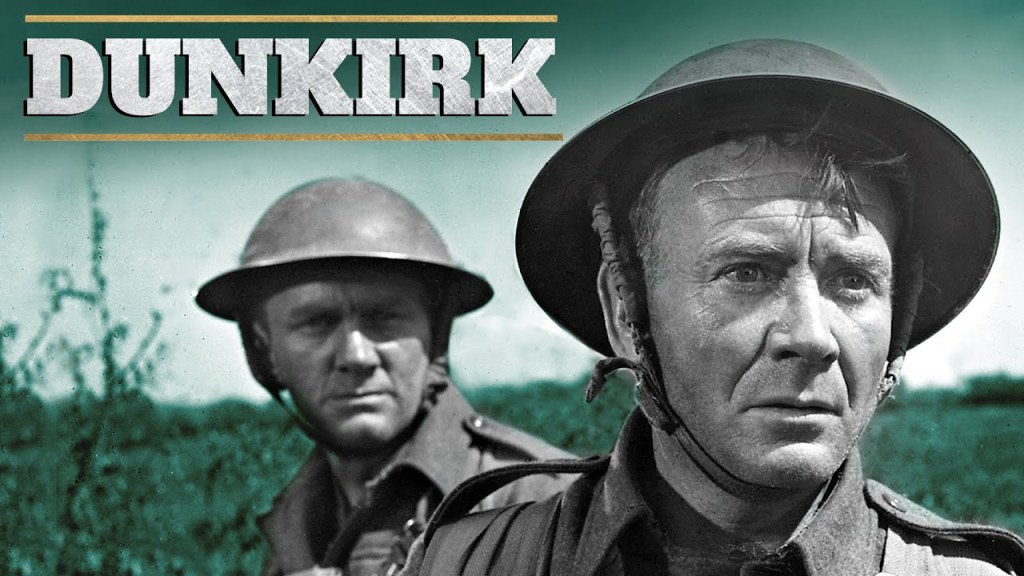
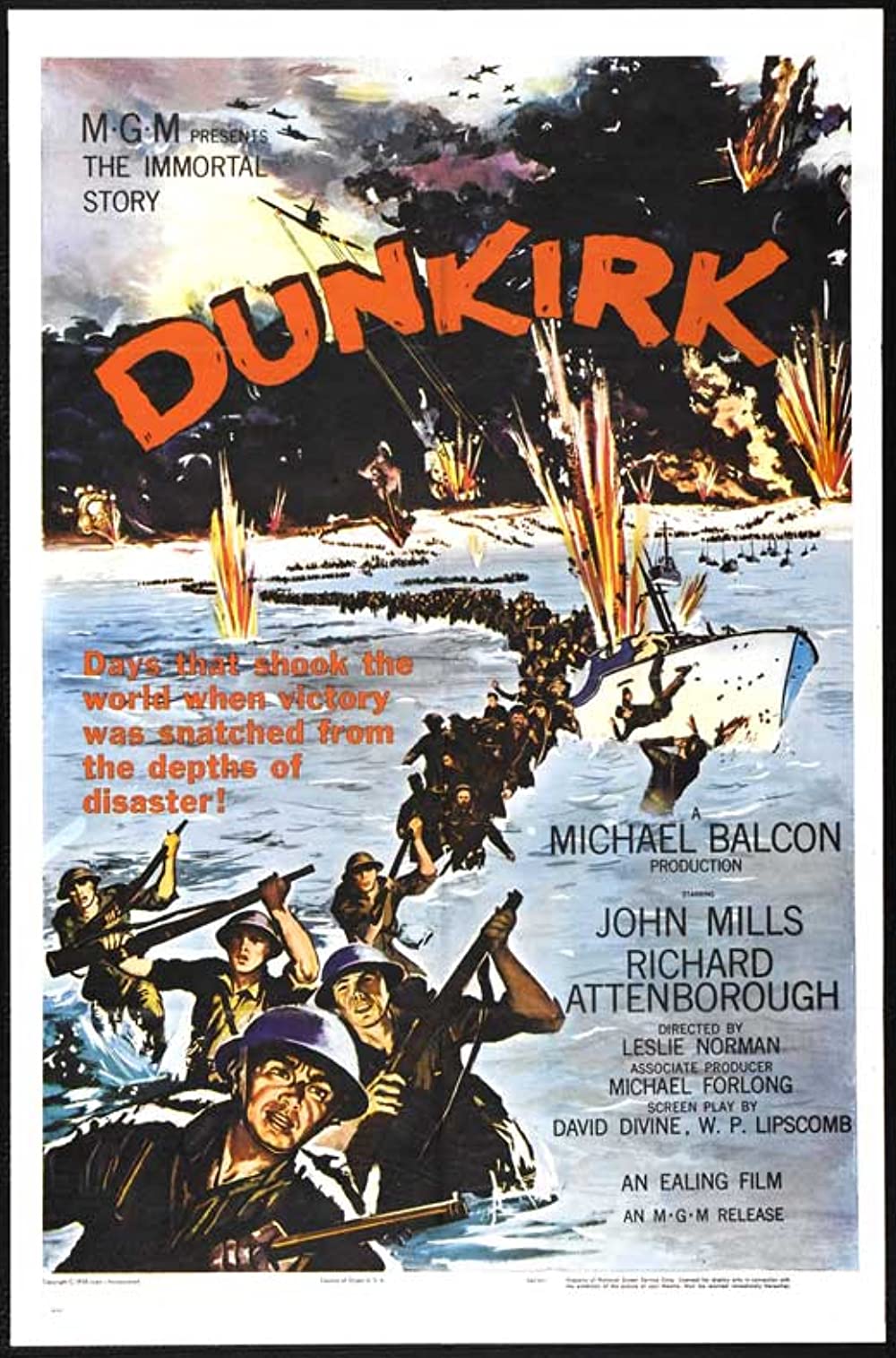
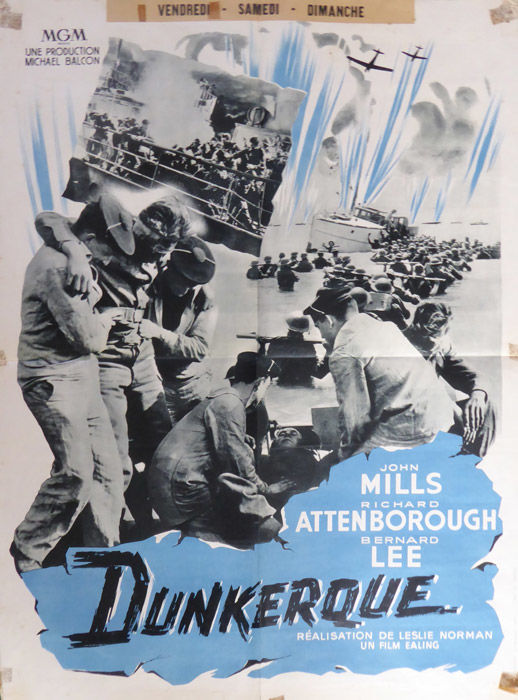
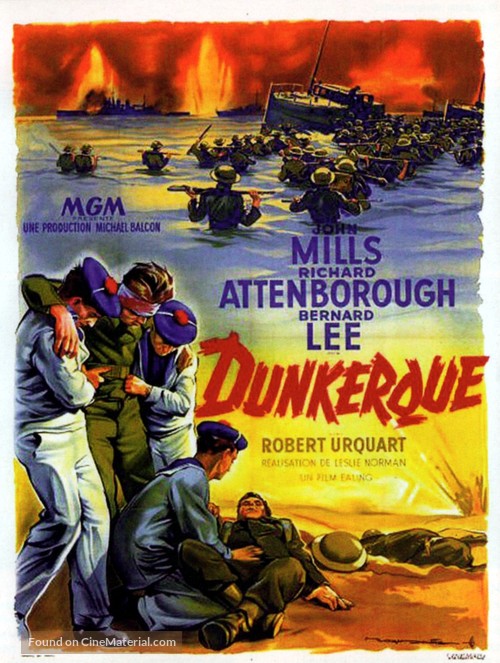
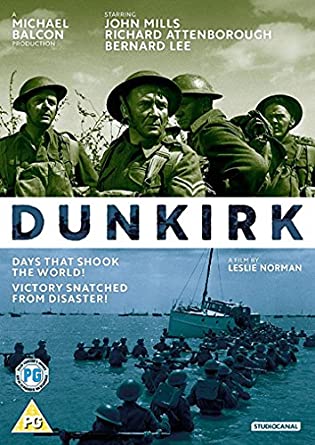
Dunkirk is a 1958 British war film directed by Leslie Norman that depicts the Dunkirk evacuation of World War II, and starring John Mills, Richard Attenborough, and Bernard Lee.
The film is based on the novels The Big Pick-Up by Elleston Trevor and Dunkirk co-authored by Lieutenant Colonel Ewan Butler and Major J.S. Bradford.
Outline
In May 1940, English journalist Charles Foreman strives to inform his readers of the dangers posed by the build-up of German forces in western Europe. He rails against the Ministry of Information for suppressing the truth. Most of his compatriots, including his neighbour John Holden, have been lulled into complacency by the lack of significant fighting during the “Phoney War”. Holden owns a garage, with a profitable side-line manufacturing belt buckles for the British Army.
The Battle of France begins and the Germans advance rapidly, trapping Allied forces along the Channel coast. Corporal “Tubby” Binns of the British Expeditionary Force (BEF) and his depleted section return from a mission to find their company has withdrawn. Their officer dies in a German air attack, leaving Binns in charge of four demoralised men (Privates Barlow, Bellman, Fraser and Russell). They abandon a main road blocked by refugees and reach a Royal Artillery battery camp, where Fraser is killed in a battle. Binns is ordered to head north with his three remaining men and two other stragglers, Privates Harper and Miles, and try to find their regiment.
Meanwhile, the situation has become so desperate that BEF commander General Gort orders all units to head for Dunkirk in the hope of evacuation. In England, Vice-Admiral Ramsay directs Operation Dynamo; the Admiralty begins commandeering all suitable civilian boats, including those owned by Foreman and Holden, to sail to Dunkirk to help evacuate troops from the beaches. The boats are marshalled at Sheerness. Foreman insists on taking his motorboat Vanity to Dunkirk himself, despite warnings of the danger. Other boat owners follow his example. After initial reluctance, Holden decides to take his boat Heron too, assisted by his teenage apprentice Frankie.
Binns’ section spend the night in an abandoned farmhouse, but at dawn, a German unit arrives and Bellman is badly wounded. Russell suffers concussion from a grenade blast. The section manages to escape, but are forced to leave Bellman behind. Later, after dodging a German camp under cover of darkness, they encounter an RAF lorry, manned by Airmen Froome and Pannet, and go with them to Dunkirk, where Allied troops are being subjected to regular aerial bombing and strafing. In the harbour, Binns and his men get aboard a ship, only for it to be blown up and sunk before it can depart. Their prospects of rescue are made worse by the Admiralty’s decision to withdraw its destroyers. Ramsay argues against withdrawal of the destroyers and, crucially, the Admiralty agrees to send them back.
Foreman and Holden ferry many soldiers to the larger vessels, but Foreman’s boat is destroyed by a bomber. He is picked up by Holden. With harbour operations no longer possible, thousands of Allied troops are gathering on the beaches. In the next Luftwaffe attack, Barlow is wounded and taken to an aid station. Heron’s engine breaks down just off the beach. While Russell, a motor mechanic, attempts to effect repairs, Foreman and Frankie go ashore to survey the scene. Next day, during church parade, Foreman is mortally wounded in an air attack. Russell completes his repairs and Binns’ group board the boat. Joined by six more soldiers, Holden sets sail for home. At sea, the engine breaks down again and the boat drifts towards the German-held port of Calais. Fortunately, they are spotted by one of the returning destroyers and taken safely back to England.
Cast
- John Mills as Corporal “Tubby” Binns.
- Richard Attenborough as John Holden.
- Bernard Lee as Charles Foreman.
- Robert Urquhart as Private (Pte) Mike Russell.
- Ray Jackson as Pte Barlow.
- Ronald Hines as Pte Miles.
- Sean Barrett as Frankie, Holden’s apprentice.
- Roland Curram as Pte Harper.
- Meredith Edwards as Pte Dave Bellman.
- Michael Bates as Airman Froome.
- Rodney Diak as Airman Pannet.
- Michael Shillo as Jouvet, a French reporter.
- Eddie Byrne as commander (Tough’s Yard).
- Maxine Audley as Diana Foreman, Charles’s wife.
- Lionel Jeffries as Colonel (medical officer).
- Victor Maddern as merchant navy seaman in pub (Maddern was a wartime merchant navy seaman).
- Anthony Nicholls as military spokesman.
- Bud Flanagan and Chesney Allen as themselves (Flanagan and Allen).
- Kenneth Cope as Lieutenant Lumpkin.
- Denys Graham as Pte Fraser.
- Barry Foster as the despatch rider who directs Tubby to the artillery battery.
- Warwick Ashton as battery sergeant major.
- Peter Halliday as battery major.
- John Welsh as staff colonel.
- Lloyd Lamble as staff colonel.
- Cyril Raymond as General Viscount Gort, VC.
- Nicholas Hannen as Vice Admiral Ramsay at Dover.
- Patricia Plunkett as Grace Holden, John’s wife.
- Michael Gwynn as commander at Sheerness.
- Fred Griffiths as Old Sweat.
- Dan Cressy as Joe.
- Christopher Rhodes as sergeant on the beaches.
- Harry Landis as Dr Levy, a military doctor working on the beach.
- John Horsley as padre.
- Patrick Allen as Sergeant on parade ground.
- Bernard Cribbins as thirsty sailor (uncredited).
- William Squire as Captain of minesweeper (uncredited).
- Bud Tingwell as Sergeant in cookhouse (uncredited).
Production
Beach sequences were shot at Camber Sands near Rye, East Sussex, and Dunkirk town centre was recreated using part of Rye Harbour. A canal-type bridge was temporarily constructed over the upper harbour, leading on to the quayside. It was over this bridge that the refugees and troops poured into the “town centre”. Several scenes take place at this location, particularly a tracking shot following two British Army officers as they discuss the situation. In the background, the viewer can make out Rye Church and some old warehouses, still extant, albeit in much restored condition. One of the warehouses was used as the interior for the “Barn Scene”.[citation needed] The scene where the bridge was blown during the early part of the film was on the River Medway at Teston Bridge, Teston in Kent.
Director Leslie Norman later recalled:
Dunkirk was bloody difficult to make from a logistics point of view. Yet it was made for £400,000 and came in under budget… I was the council school boy who became a major in the war, and that had a lot to do with the way I felt about Dunkirk. I didn’t think that Dunkirk was a defeat; I always thought it was a very gallant effort but not a victory.
The musical score is by Malcolm Arnold, which may account for the fact that many of its segments sound very much like his Academy Award-winning theme from The Bridge on the River Kwai, made the previous year (1957).
Release
The world premiere was at the Empire, Leicester Square, in London on 20 March 1958.
The film was the third most popular production at the British box office in 1958, after Bridge on the River Kwai and The Vikings (Other accounts say it was the second, making $1,750,000).
According to MGM records it earned only $310,000 in the US and Canada but $1,750,000 elsewhere, resulting in a profit of $371,000.
Trivia
- When the troop ship taking the platoon home is bombed and sunk in Dunkirk harbor, the scene of the ship sinking is taken from The Cruel Sea (1953), which depicts the sinking of HMS “Compass Rose”.
- Strand Quay, on the west side of the town of Rye, was used for the Dunkirk perimeter.
- In one shot, the top of St. Mary’s Parish Church may be spotted, and in another, we get a glimpse of the famous Mermaid Street in the background.
- The last words uttered on-screen by the dying soldier played by Meredith Edwards are in the Welsh language, although they are barely audible.
- The lines were written in English originally, but Edwards argued that a Welshman who knew he was dying would want his last words to be in his native tongue.
- The director agreed, and Edwards spoke in Welsh.
- The command centre used by Vice Admiral Ramsey (Nicholas Hannen) was the actual bunker used during the operation.
- It is part of a large underground complex beneath Dover Castle.
- It is open to the public.
- The balcony in the cliffs is visible from the ferry terminal below.
- Sir Richard Attenborough appeared in this movie. His grandson Will Attenborough appeared in Dunkirk (2017).
- The gas mask that John Holden (Sir Richard Attenborough) fits on his child was one of thirty-eight million issued by Britain during the war.
Production & Filming Details
- Director(s):
- Leslie Norman.
- Producer(s):
- Michael Balcon … producer.
- Michael Forlong … associate producer.
- Writer(s):
- Trevor Dudley Smith … (novel) (as Elleston Trevor).
- Ewan Butler … (book) (as Lieutenant Colonel Ewan Butler).
- J.S. Bradford … (book) (as Major J.S. Bradford M.B.E. M.C.).
- David Divine … (screenplay).
- W.P. Lipscomb … (screenplay).
- Music:
- Malcolm Arnold.
- Cinematography:
- Paul Beeson … director of photography.
- Editor(s):
- Gordon Stone.
- Production:
- Ealing Studios.
- Distributor(s):
- Metro-Goldwyn-Mayer (MGM) (1958) (UK) (theatrical).
- Metro-Goldwyn-Mayer (MGM) (1958) (USA) (theatrical).
- Metro-Goldwyn-Mayer (MGM) (1958) (France) (theatrical).
- Metro-Goldwyn-Mayer (MGM) (1958) (Australia) (theatrical).
- Metro-Goldwyn-Mayer (MGM) (1958) (Ireland) (theatrical).
- Metro-Goldwyn-Mayer (MGM) (1958) (Japan) (theatrical).
- Metro (1958) (Norway) (theatrical).
- Metro-Goldwyn-Mayer (MGM) (1958) (West Germany) (theatrical).
- Metro-Goldwyn-Mayer (MGM) (1958) (Italy) (theatrical).
- Metro-Goldwyn-Mayer (MGM) (1958) (Sweden) (theatrical).
- Metro-Goldwyn-Mayer (MGM) (1959) (Netherlands) (theatrical).
- Metro-Goldwyn-Mayer (MGM) (1959) (Finland) (theatrical).
- Metro-Goldwyn-Mayer (MGM) (1960) (Denmark) (theatrical).
- CBS (1980) (USA) (TV) (network premiere).
- StudioCanal (2017) (Germany) (Blu-ray).
- StudioCanal (2017) (Germany) (DVD).
- Umbrella Entertainment (2013) (Australia) (DVD).
- Umbrella Entertainment (2013) (Australia) (video).
- Warner Home Video (1994) (UK) (VHS).
- Release Date: 20 March 1958 (Premiere, London, UK).
- Rating: U.
- Running Time: 135 minutes.
- Country: UK.
- Language: English.

 Military Gogglebox
Leave a comment