
Introduction
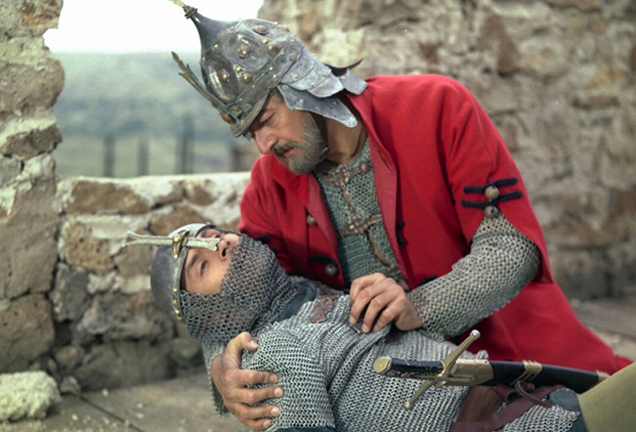
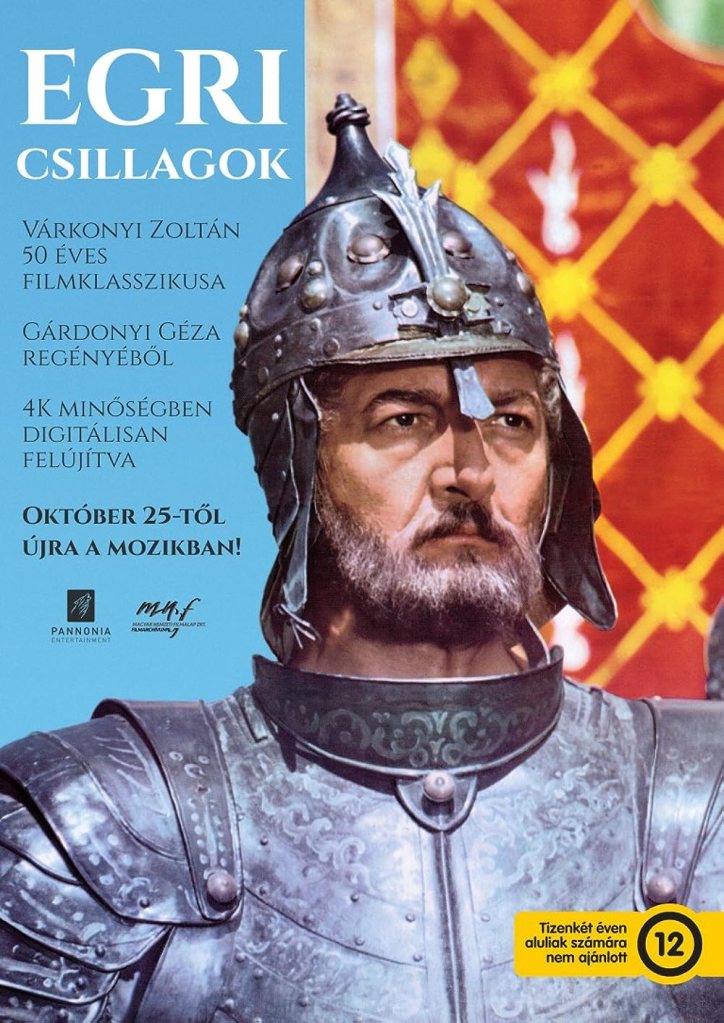
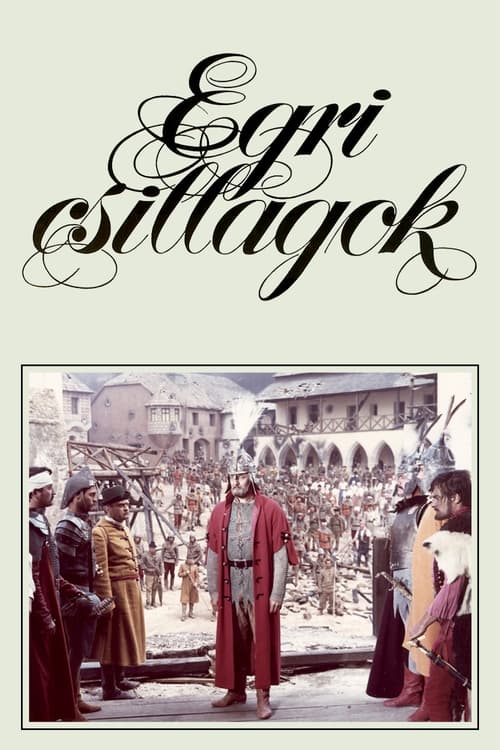
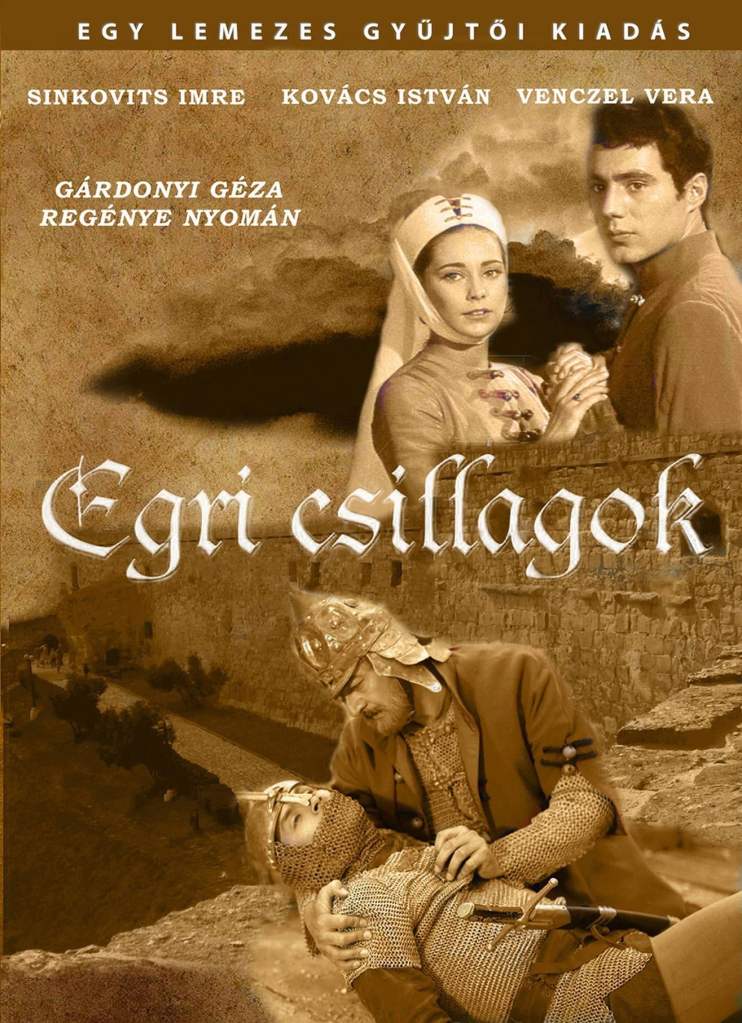
Stars of Eger (Hungarian:Egri csillagok) is a 1968 Hungarian-Bulgarian historical film directed by Zoltán Várkonyi and starring Imre Sinkovits, György Bárdy and István Kovács. It is an adaptation of the 1899 novel Eclipse of the Crescent Moon by Géza Gárdonyi. An earlier silent film adaptation, Stars of Eger, was made in 1923. “Stars of Eger” is a direct translation of the original Hungarian title of the novel.
Outline (Film)
Adaptation of a novel about a time when Hungary was dominated by the Ottoman Turkish empire.
Background
The story is set in the first half of the 16th century and covers a period of roughly 25 years. The main historical events that are addressed are the bloodless occupation of Buda, the seat of the Hungarian kings, in 1541, and the 1552 Siege of Eger (now in Northern Hungary) by the Turks that forms the major topic of the novel. The story also addresses some other historical topics like the impact of the Reformation, the discord between Hungarians and the Holy Roman Emperor, as well as many themes of general import like mercy, filial and marital love, friendship, trust and truthfulness.
Most characters of the book are historical figures, notably the hero Gergely Bornemissza himself, though most of them have been strongly romanticized according to the author’s intentions. Gergely’s life story in the novel is almost fully invented, except for his role as an officer during the siege of Eger. Éva Cecey, Gergely’s love and later wife, is fictional; her portrayal in the novel is based on Gárdonyi’s “ideal woman”.
Outline (Novel)
The novel consists of five parts that tell the life of Gergely Bornemissza from the age of eight until the year 1552, when he is in his early thirties.
I. Gergely is a half-orphan and son of a poor woman, while Éva Cecey is the daughter of a landowner. They are nevertheless playmates. While playing in the woods, the two children are captured by a Turk named Jumurdzsák and have to join a trek of prisoners. Due to the cunning of little Gergely, the two children are able to escape and later also to free the other prisoners. Gergely’s mother dies in a raid by the Turks, but the little boy is adopted as a foster son by the rich aristocrat Bálint Török, where he gets a good education.
II. Several years later, Gergely has to experience that Buda is captured by the Turks through deceit and his foster father Bálint Török is led away prisoner. Gergely meets Éva again, who has become a pretty young girl.
III. Gergely learns that Éva who is an excellent rider and fighter is to be married to the cowardly Adam Fürjes at the request of the queen. They flee together and get married. Together with some friends they plan to free Bálint Török from his prison in Istanbul. They go to the Ottoman city, but despite many adventures, they finally fail in freeing the Hungarian aristocrat.
IV. It is 1552, a force about 200,000 Turks is approaching the little town of Eger, the citadel of which is only defended by 2000 soldiers. István Dobó, captain of the citadel, calls on the troops of the emperor for aid, but no-one arrives. Gergely joins the forces who are preparing to fight in Eger, while leaving Éva home with their little son. Shortly after he has left, a stranger arrives and kidnaps the little boy. Éva realises that the stranger must have been the Turk Jumurdzsák. She understands that there must be a connection with the siege of Eger, so she masquerades as a man and tries to enter the besieged castle.
V. Even though the forces of the Turks are overwhelming, the Hungarians in Eger are able to defend themselves. Eger’s strong walls and the high morale of its defenders allows the fortress to withstand five major assaults and continuous cannon fire – almost 12,000 cannonballs land inside the fortress before the siege ended. In a stroke of unparalleled ingenuity, Bornemissza devises primitive but lethal grenades and powder keg sized bombs to use against the attackers, as well as a water-mill wheel packed with gunpowder which he rolls into the Ottoman ranks. Éva finally arrives at Eger. Though the Ottomans attack again and again, the citadel stands firm, with also the women of Eger joining the battle. Finally, the Ottoman forces withdraw. Gergely’s and Éva’s little son is exchanged for a Turkish boy who has been captured, and the family is finally reunited.
Cast
- Imre Sinkovits – István Dobó
- György Bárdy – Jumurdzsák
- István Kovács – Gergely Bornemissza
- Tibor Bitskey – Mekcsey István
- Gábor Agárdy – Sárközy
- Vera Venczel – Éva Cecey
- Éva Ruttkai – Queen Isabella Jagiellon
- Hilda Gobbi – Baloghné
- Vera Szemere – Ceceyné
- Péter Benkő – János Török
- Rudolf Somogyvári – István Hegedûs
- Gyula Benkő – Veli bég
- László Tahi Tóth – Kobzos Ádám
- Géza Tordy – Miklós
- Tamás Major – Sultan Suleiman the Magnificent
- Miklós Szakáts – Beylerbey
- Gábor Mádi Szabó – Cecey
- Zoltán Latinovits – Imre Varsányi
- Gábor Koncz – János
- Samu Balázs – Pope Julius III
- Géza Polgár – Bojki Tamás
- Antal Farkas – Debrõi, innkeeper
- József Fonyó – Emperor Ferdinand’s interpreter
- László György – Woodsmith
- József Horváth – Sukán
- László Inke – Kara Ahmed Pasha
- László Márkus – Turkish Lord
- György Korga – Bornemissza Jancsika
- Tibor Molnár – Friar Márton
- Lajos Pándy – Fügedy
- János Rajz – Friar
- Levente Sipeki – Fürjes Ádám
- Nándor Tomanek – Preacher
- István Velenczei – Father György
- Endre Szász – Painter
- Ferenc Zenthe – Josef, the German mercenary
- László Bánhidi – Jumurdzsák’s prisoner
- Ferenc Bessenyei – Bálint Török
- Péter Blaskó – Hungarian soldier
- András Kern – Cook
- István Bujtor – Blacksmith
- László György – Blacksmith
- Teri Horváth – Egri woman
- Ildikó Pécsi – Egri woman
- Nóra Tábori – Egri woman
- Zoltán Várkonyi – Emperor Ferdinand I
- Gábor Harsányi
- Sándor Kömíves
- Hédi Temessy
Trivia
- One widely known urban legend holds that a Turkish soldier can be glimpsed wearing a modern-day wristwatch.
- This has become one of the most oft-repeated “facts” about the film.
- In fact, no one has ever pinpointed where this supposed goof occurs, and a wristwatch can only be seen on behind-the-scenes photographs made during filming breaks.
- Thousands of Turkish tents were erected.
- Set designer Endre Szász was forced to learn horse riding during production just to be able to inspect them all, since they were spaced so widely apart.
- About five to six thousand infantrymen from the Hungarian People’s Army were hired as extras for the grand battle scenes.
- The third most-watched Hungarian film in history.
- In its home country of about 10 million people, it attracted 9.36 million viewers.
- It was only surpassed by Mágnás Miska (1949) (9.5 million viewers) and Men and Banners (1965) (9.38 million viewers).
- In comparison, even the most popular international movies struggle to reach over one million viewers in today’s Hungary.
Production & Filming Details
- Director(s):
- Zoltán Várkonyi
- Producer(s):
- András Németh … producer
- Writer(s):
- Géza Gárdonyi … (novel)
- István Nemeskürty … (screenplay)
- Music:
- Ferenc Farkas
- Cinematography:
- Ferenc Szécsényi
- Editing:
- Ferencné Szécsényi … (as Mária Széczényi)
- Production:
- Mafilm
- Distributor(s):
- Paradise Film Exchange (Canada, 1971)(Italian Language, theatrical)
- Rare Films and More (United States, 2016)(English sub-titles, Spanish sub-titles, DVD)
- Ullstein AV (West Germany, 1971)(Super 8 rental prints with optical sound)
- Release Date: 19 December 1968.
- Running time: 157 minutes.
- Rating: Unknown.
- Country: Hungary.
- Language: Hungarian.


 Military Gogglebox
Leave a comment