
Introduction
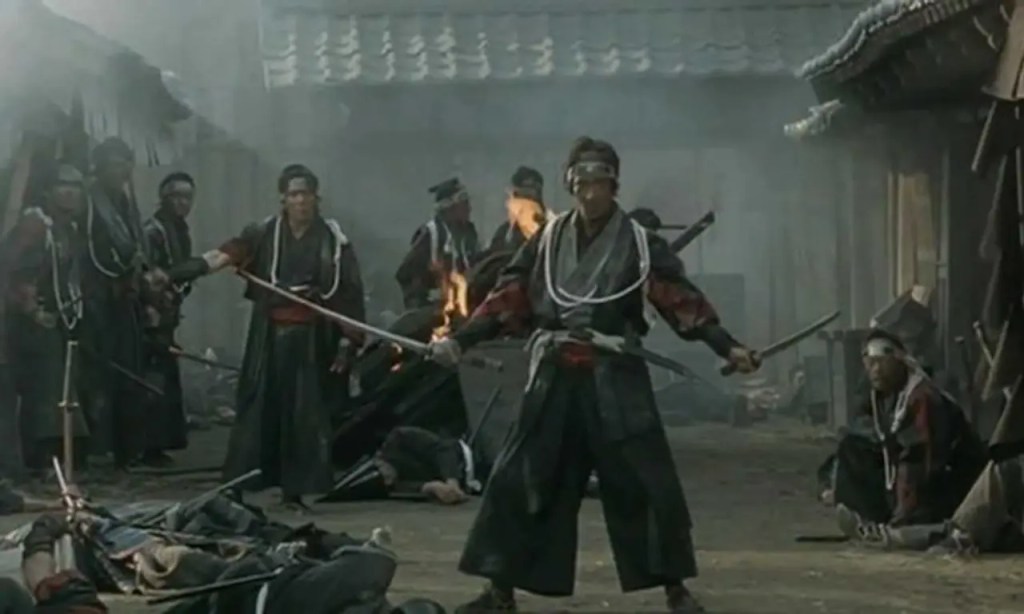
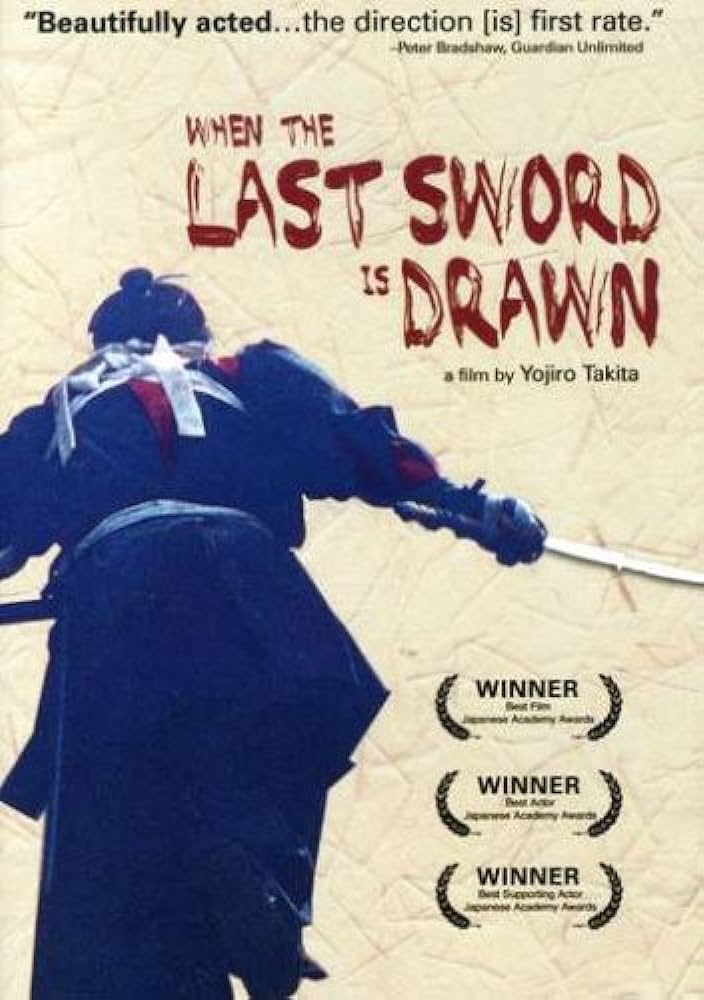
When the Last Sword Is Drawn (壬生義士伝, Mibu Gishi Den, Legend of the Loyal Retainers of Mibu) is a 2002 historical drama film directed by Yōjirō Takita loosely based on real historical events.
When the Last Sword Is Drawn won the Best Film award at the 2004 Japanese Academy Awards, as well as the prizes for Best Actor (Kiichi Nakai) and Best Supporting Actor (Kōichi Satō). It received a further eight nominations.
Outline
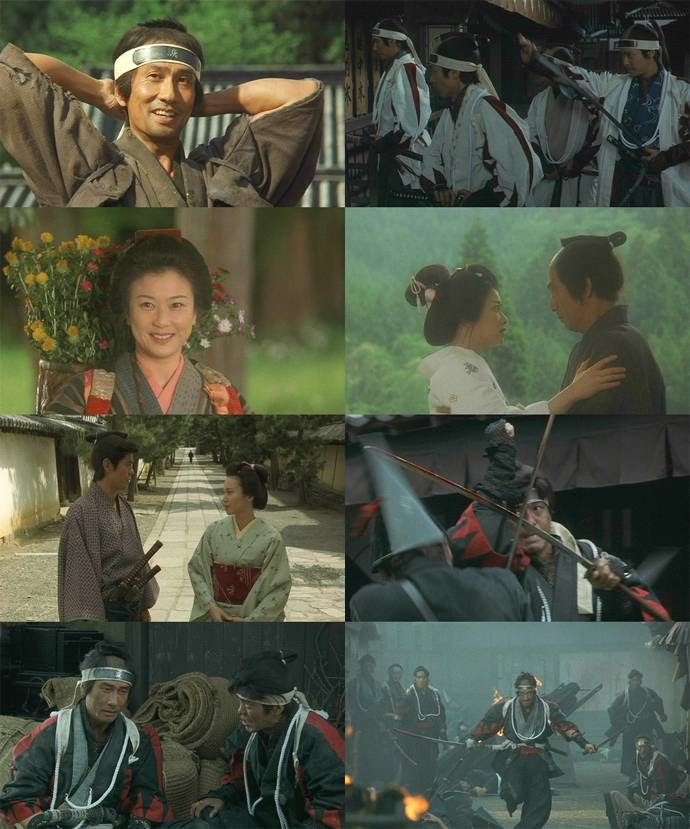
The film tells the story of two Shinsengumi samurai. Saitō Hajime (played by Kōichi Satō) is a heartless killer. Yoshimura Kanichiro (played by Kiichi Nakai) appears to be a money-grabbing and emotional swordsman from the northern area known as Nambu Morioka.
The main storyline is set during the fall of the Tokugawa shogunate, but it is told in a series of flashbacks as Saitō and another man reminisce. The themes include conflicting loyalty to the clan, lord, and family.
More than just swordplay, it is the story of a man willing to do anything for the good of his family, even if it means never being able to see them.
Cast
- Kiichi Nakai — Yoshimura Kanichiro
- Kōichi Satō — Saitō Hajime
- Yui Natsukawa — Shizu/Mitsu
- Takehiro Murata — Ono Chiaki
- Miki Nakatani — Nui
- Yuji Miyake — Ohno Jiroemon
- Sansei Shiomi — Kondō Isami
- Eugene Nomura — Hijikata Toshizo
- Masato Sakai — Okita Soji
- Atsushi Itō — Young Chiaki Ono
- Kanji Tsuda — Ōkubo Toshimichi
- Hideaki Itō — Tokugawa Yoshinobu
Trivia
- The title “Mibu gishi den” literally means “Story of the Righteous Samurai of Mibu,” and alludes to the “Ako gishi,” better known in the West as the 47 Ronin.
- The character Yoshimura Kanichiro is from the north of Japan (around the present day Iwate prefecture).
- Thus he speaks with a strong accent.
- The Shinsengumi were a group of swordsmen employed by the Tokugawa shogunate.
- The group was created during the crisis period of the late Edo period when some groups in Japan wanted to overthrow the shogunate and return the emperor to a more central position.
- The Shinsengumi’s initial name was “Ronin of Mibu” from which the title of the film was derived.
- Mibu happens to be a town where the group was formed.
- In the movie, the Ono family uses the modern “biohazard” symbol as their ‘mon’ (family symbol).
Production & Filming Details
- Director(s):
- Yôjirô Takita
- Producer(s):
- Nozomi Enoki … producer (as Nozomu Enoki)
- Hideji Miyajima … producer
- Writer(s):
- Jirô Asada … (story)
- Takehiro Nakajima … (writer)
- Music:
- Joe Hisaishi
- Cinematography:
- Takeshi Hamada
- Editor(s):
- Nobuko Tomita
- Production:
- TV Tokyo
- Television Osaka (TVO)
- DENTSU Music And Entertainment
- Eisei Gekijo
- Culture Publishers (CP)
- Shochiku
- Distributor(s):
- Shochiku (Japan, 2003)(theatrical)
- Tartan (United Kingdom, 2004)(theatrical)
- Asian Crush (United States, 2011)
- Digital Media Rights (United States, 2011)
- Mediasoft Films (South Korea, 2003)
- Tartan Video (United Kingdom, 2005)(DVD)
- e-m-s the DVD-Company (Germany, 2007)(DVD)
- Release Date: 04 November 2002 (Tokyo International Film Festival, Japan).
- Running Time: 143 minutes.
- Rating: 15.
- Country: Japan.
- Language: Japanese.


 Military Gogglebox
Leave a comment